Christian Theologians: 15 Famous and Modern Names to Read
The Christian theologians most worth reading are the ones whose questions later theologians still have to answer, from Irenaeus and Augustine in the early church to Aquinas, Calvin and Barth. This list gives fifteen of them, grouped by era, with the question each one still puts to you and the book to open first. It is built as a reading plan for someone already inside the debates, so it skips the potted biographies and spends its words on why each Christian theologian is still worth an evening.
Key takeaways
- Fame does not earn a place here. Each Christian theologian on this list opened a question that the field has not finished answering.
- The early church settled the vocabulary. Trinity, incarnation and grace were fixed between Irenaeus and Augustine.
- The Reformation and modern eras fought over freedom and revelation. Luther, Calvin, Edwards, Schleiermacher and Barth each answered differently.
- Analytic theology is the live movement. Since 2009 it has restated doctrine with the precision of analytic philosophy. Frame-Indexed Classical Theism works inside it, taking up the questions that Calvinism and Arminianism, and Thomism and Scotism, left open.
What makes a Christian theologian worth reading?
A Christian theologian is worth reading when he opened a question the field has not finished answering; fame alone does not qualify. A Christian theologian is someone who reasons about God from revelation, systematically and within the confession of the Church. The task differs from philosophy and from apologetics.
A philosopher argues from premises that any careful reader can inspect, whether or not that reader accepts Scripture. An apologist defends the faith to people outside it. A theologian works from inside, asking what the Church already confesses and what follows from it.
Many of the figures below did more than one of these jobs. Augustine and Aquinas are claimed by philosophers as readily as by theologians. The companion list of Christian philosophers treats several of the same questions from the side of argument.
Free — the complete book
Get Book 1: Resolving the Free Will Dilemma free when you enter your name and email.
This essay takes one piece of it. Resolving the Free Will Dilemma takes the whole dilemma from first axiom to conclusion — the complete book, free.
No spam. Unsubscribe in one click.
That rule, a question still open, decides the list. It leaves out some beloved writers; the omissions are named honestly further down. It also explains the order. The list runs by era because each generation inherited the open questions of the one before it. The most useful way to read the great theologians is as one long argument carried across centuries.
If you want to see that argument carried into the classical dilemmas, Volume One is free; download it.
Which early Christian theologians still set the terms?
Irenaeus, Athanasius, Augustine and Gregory of Nyssa still set the terms because they fixed the words the Church would use about God. The famous theologians of the first four centuries left later Christian theologians the vocabulary for the Trinity, the incarnation and grace.
Irenaeus of Lyon
Irenaeus was a second-century bishop of Lyon who had heard the preaching of Polycarp, a link to the apostolic generation. Around 180 he wrote Against Heresies, a sustained refutation of the Gnostic teachers, Valentinus above all, who split the God of creation from the God of redemption. Irenaeus answered that the one God who made the world also saves it, and that Christ sums up and restores the whole of human life.
The question he left the Church is still basic: is the God who made the world the same God who redeems it? Begin with Against Heresies, Book III, where he defends the apostolic tradition.
Athanasius of Alexandria
Athanasius (c. 296–298 to 373) attended the Council of Nicaea in 325 as a young deacon and became patriarch of Alexandria three years later. He spent the rest of his life defending the council's confession that the Son is fully God, against Arius and against a series of emperors. He was sent into exile five times, seventeen years in total. His short treatise On the Incarnation argues that only God could restore the image of God in fallen humanity.
The question he pressed is still the hinge of Christology: is the Son fully God, or the highest of creatures? On the Incarnation, short enough for a single sitting, is the place to start.
Augustine of Hippo
Augustine (354–430) wrote the Confessions, The City of God and On the Trinity. Few Western theologians since have worked without him. His doctrine of original sin and the necessity of grace took its definite form in his controversy with Pelagius, who held that human beings could obey God by their own natural powers. Augustine answered that a fallen will cannot turn to God without grace. The Reformers took that conclusion up a thousand years later. It still divides Christians today.
The question he left is the one behind the debates over total depravity: what can a fallen will do without grace? Start with the Confessions, where the theology is worked out in the story of one life.
Gregory of Nyssa
Gregory of Nyssa (c. 335 to c. 394) was one of the three Cappadocian Fathers, with Basil and Gregory of Nazianzus. He took part in the First Council of Constantinople in 381. He was one of the first theologians to argue that God is infinite. From that he drew a striking conclusion: a finite mind can grow in the knowledge of God without end and never exhaust it. His Life of Moses reads the ascent of Sinai as that endless growth.
The question he set is the root of apophatic theology: how can a finite mind know an infinite God at all? Begin with the Life of Moses.
The books page lists the full Many Beings series, which takes up these questions one dilemma at a time.
Which medieval and Reformation theologians matter most?
Aquinas, Luther, Calvin and Turretin matter most because they inherited the early church's vocabulary and asked what it could bear. Aquinas and Calvin still anchor Catholic and Protestant theology in the West.
Thomas Aquinas
Thomas Aquinas (c. 1225–1274) left the Summa Theologiae unfinished at his death, after nearly a decade of work. It remains the reference point for Catholic theologians. His most consequential teaching for this list is the doctrine of analogy. Words such as "good" and "wise" are true of God and of creatures, he argued, in senses that are related without being identical, so that we speak truly of God without making Him a larger creature.
The question he set is the one this site returns to most often: in what sense are our words true of God? Start with the Summa, First Part, Questions 2 to 13, and read the account of Thomism alongside it.
Martin Luther
Martin Luther (1483–1546) wrote the Ninety-five Theses in 1517, the year from which Protestant theologians date their tradition. His most searching theological work came in 1525, when he answered Erasmus's On Free Will (1524) with On the Bondage of the Will. Erasmus held that the will cooperates with grace. Luther replied that, in the things of salvation, the will is bound until God frees it. The argument set the terms for the Protestant doctrine of the sovereignty of God in salvation.
The question Luther left is whether the human will is free toward God at all. On the Bondage of the Will, more readable than its reputation, is the book to open.
John Calvin
John Calvin (1509–1564) published the first edition of the Institutes of the Christian Religion at Basel in 1536 and spent most of his working life in Geneva revising and enlarging it. The tradition that bears his name is often reduced to predestination, but the Institutes opens with a different claim: that knowledge of God and knowledge of ourselves are bound together, so that neither can be had without the other.
The question he set is how God's sovereignty reaches the salvation of a particular person. The answer his followers built from it is set out in our account of Calvinism. Start with Book I of the Institutes, on the knowledge of God the Creator.
Francis Turretin
Francis Turretin (1623–1687) is the least famous name in this section and among the most important Reformed theologians for a reader who wants precision. His Institutes of Elenctic Theology, published in three parts at Geneva between 1679 and 1685, set Reformed doctrine out in scholastic form, question by question, with objections answered. It served as the systematic textbook at Princeton Theological Seminary until Charles Hodge's Systematic Theology replaced it. Turretin also used the distinction between archetypal theology, God's own knowledge of Himself, and ectypal theology, the knowledge fitted to creatures.
The question he left is what kind of knowledge of God a creature can have. Start with the first topic of his Institutes, on theology itself.
Read Volume One free and test the argument yourself: get your copy.
Who are the most important modern theologians?
The modern Christian theologians who matter most here are Edwards, Schleiermacher, Bavinck, Barth, Rahner, Henry and Crisp. Each answered the Enlightenment's question in a different way: can revelation still be the starting point for knowledge of God?
Jonathan Edwards
Jonathan Edwards (1703–1758) led revivals at Northampton during the First Great Awakening and wrote Religious Affections, which evangelical theologians still read as a guide to telling true faith from imitation. His Freedom of the Will (1754) argued that a will can be fully determined and still free: freedom, on his account, means doing what one wants. He died shortly after becoming president of the College of New Jersey.
The question he left sits at the centre of the debate over Calvinism and Arminianism: is a determined will still a free one?
Friedrich Schleiermacher
Friedrich Schleiermacher (1768–1834) is often called the father of modern liberal theology. His On Religion: Speeches to Its Cultured Despisers (1799) and The Christian Faith (1821–1822) grounded doctrine in the feeling of absolute dependence on God rather than in the creeds or the letter of Scripture. He meant to win back educated readers the Enlightenment had lost. His method set the agenda for a century of Protestant thought.
The question he set is whether theology starts from doctrine or from religious experience.
Herman Bavinck
Herman Bavinck (1854–1921), a Dutch Calvinist, wrote the four-volume Reformed Dogmatics between 1895 and 1901. It answered Schleiermacher's century without retreating from Reformed orthodoxy: Bavinck read the modern theologians closely, granted what they saw, and rebuilt the classical doctrine of God in conversation with them. English translation has brought him back into wide use among Reformed theologians.
The question he set is whether orthodoxy can engage modern thought without surrendering to it.
Karl Barth
Karl Barth (1886–1968) broke with the liberal theology he was taught in his commentary The Epistle to the Romans (1919). He was the principal author of the Barmen Declaration of 1934, the Confessing Church's refusal of Nazi control. He wrote the Church Dogmatics from 1932 to 1967 and left it unfinished at his death. Barth held that God is known only where God reveals Himself. He rejected the Catholic analogy of being as, in his words, "the invention of Antichrist".
The question he set is whether knowledge of God begins from revelation alone.
Karl Rahner
Karl Rahner (1904–1984), a German Jesuit, is considered among the most influential Catholic theologians of the twentieth century, with Henri de Lubac, Hans Urs von Balthasar and Yves Congar. Twenty-three volumes of Theological Investigations hold his essays in English; Foundations of Christian Faith (1976) sets his thought out as one argument. His best-known thesis is that "the economic Trinity is the immanent Trinity": God as He acts toward us is God as He is in Himself.
The question he set is whether that identity holds without remainder.
Carl F. H. Henry
Carl F. H. Henry (1913–2003) called American evangelicals out of separatist fundamentalism in The Uneasy Conscience of Modern Fundamentalism (1947). In 1956 he became the first editor-in-chief of Christianity Today. His six-volume God, Revelation and Authority (1976–1983) argued that we can say anything true about God only because God has spoken. He remains a reference point among evangelical theologians for a public, reasoned case for revelation.
The question he set is whether that case can be made in the open.
Oliver D. Crisp
Oliver D. Crisp (born 1972) is, as of 2026, Professor of Analytic Theology at the University of St Andrews and formerly taught at Fuller Theological Seminary. With the philosopher Michael Rea he led the movement that took its name from their 2009 volume, Analytic Theology: doctrine stated with the clarity and argumentative discipline of analytic philosophy.
The question the movement sets is whether doctrine can be stated precisely enough to test.
If you want the argument rather than the survey, start with Volume One.
Who is missing from this list, and why?
Any list of fifteen Christian theologians leaves out names a reader will miss. Dietrich Bonhoeffer, Hans Urs von Balthasar, John Wesley, J. I. Packer and Jürgen Moltmann each have a strong claim. A different selection rule would include them. The rule here was narrow on purpose: each name had to open a question that later theologians still have to answer, and to open it in a way that bears on how human words reach God.
That rule ranks nothing by holiness or by worth. It is a map of one argument. A map leaves things off. If a name you expected is absent, the likeliest reason is that the question it is known for sits outside this thread. That says nothing about how much it matters. For the full catalogue of Christian theologians by century, the Wikipedia list is the place to browse.
Where does Frame-Indexed Classical Theism fit among Christian theologians?
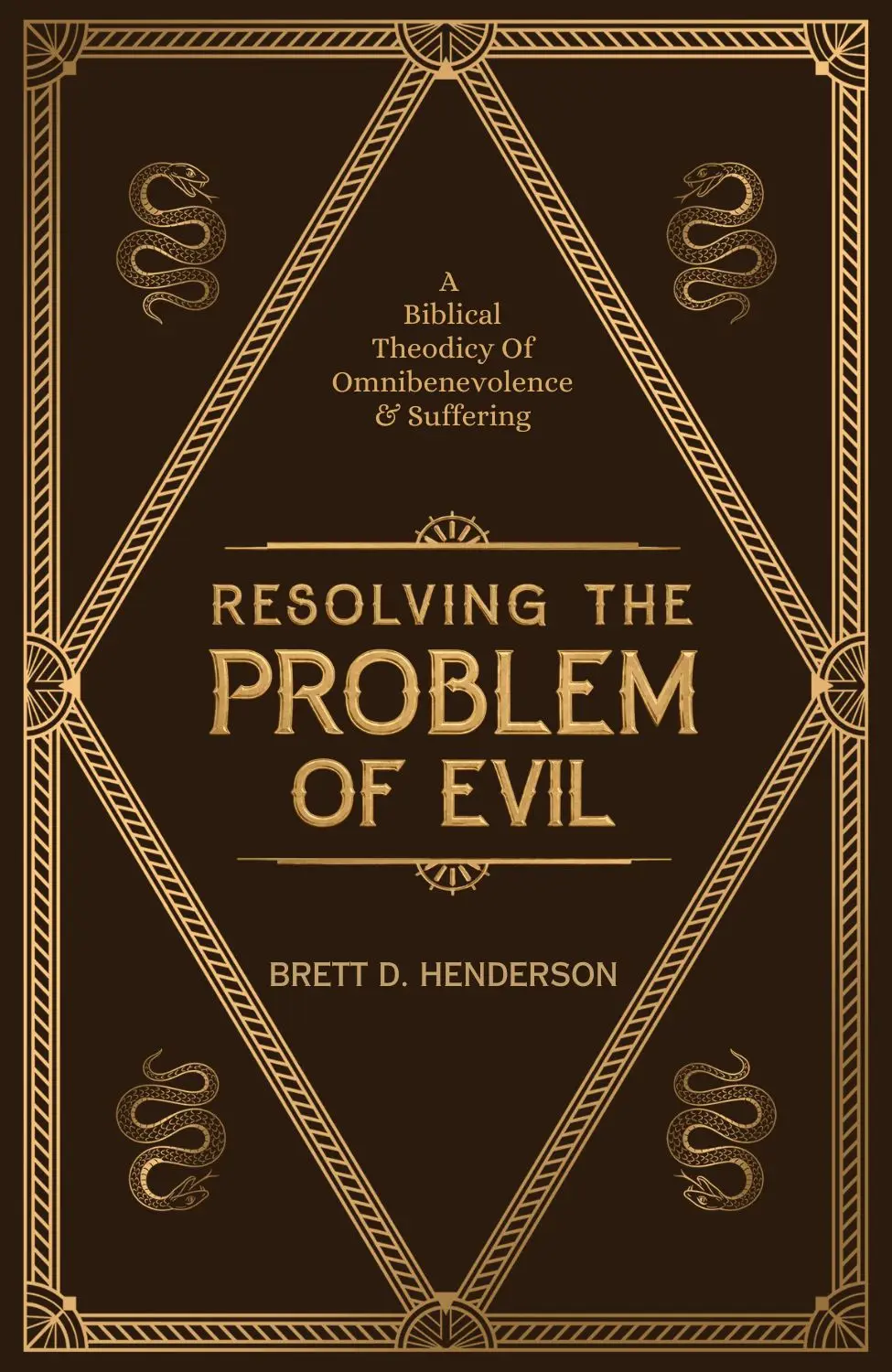
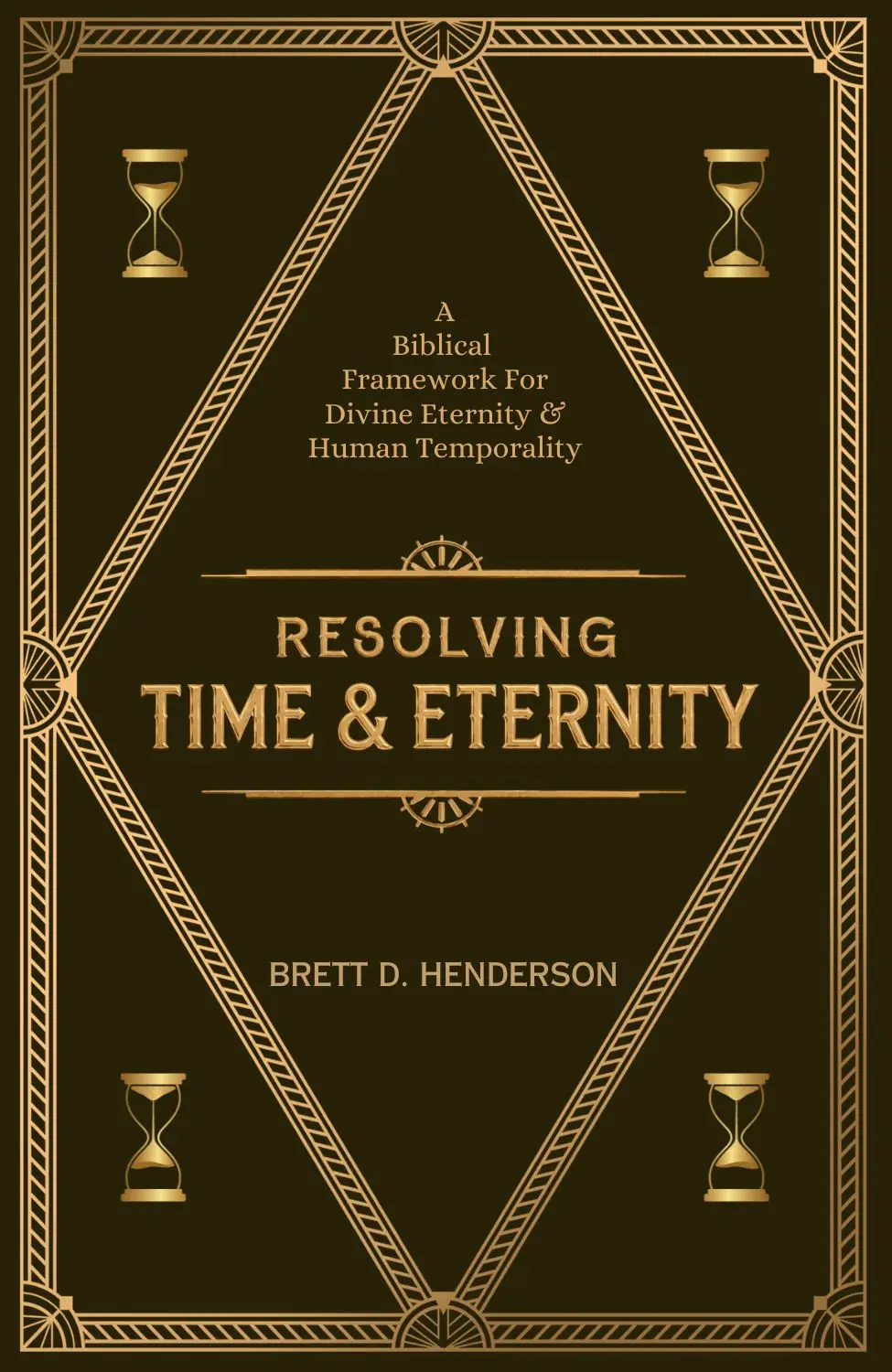
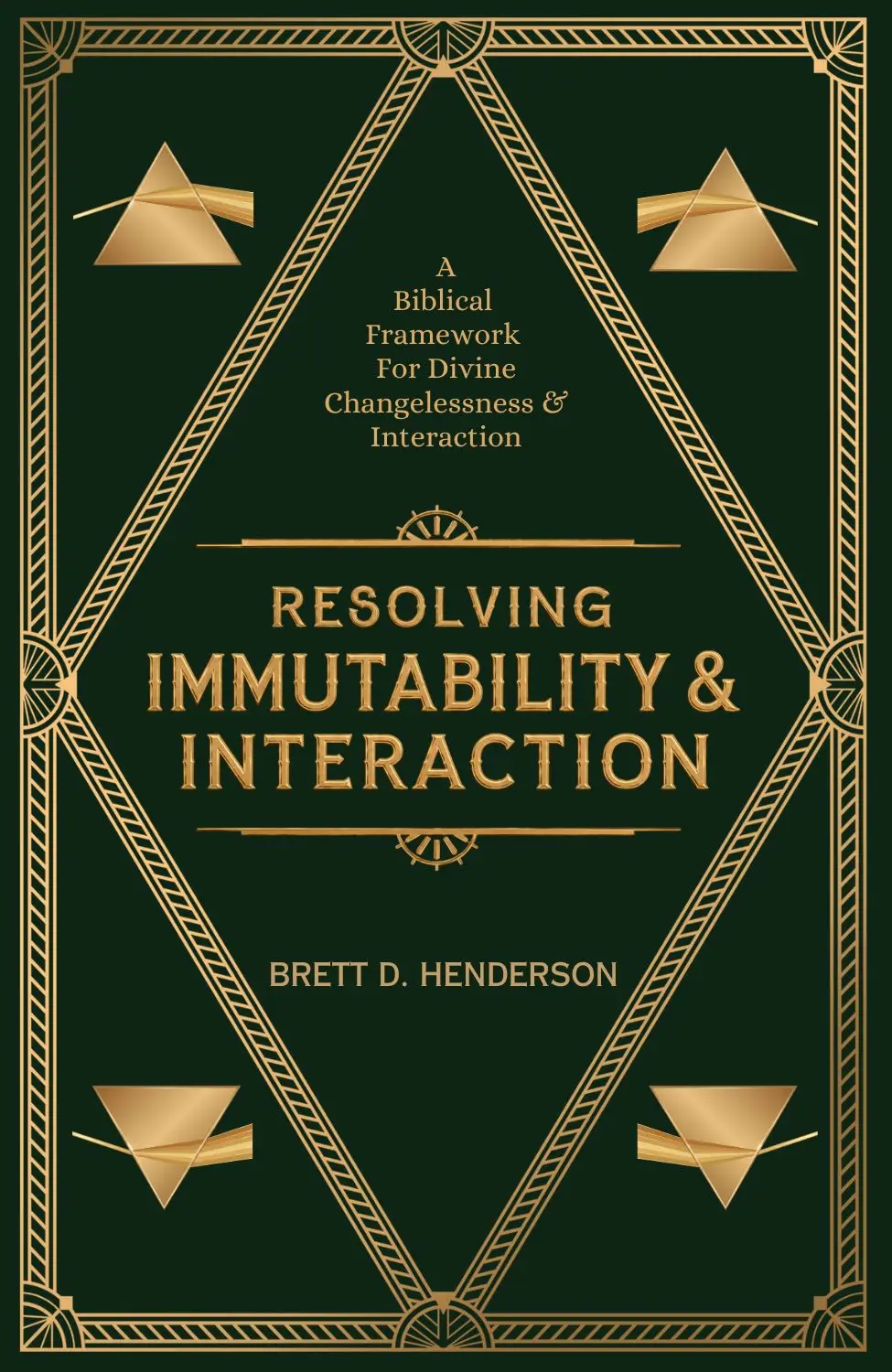
Brett D. Henderson is a Christian philosopher and theologian. His Many Beings series argues a position called Frame-Indexed Classical Theism (FICT), which belongs at the analytic end of the line this list traces. Its claim can be stated in a sentence: words whose content involves time, possibility, agency or value are true of God and of us analogically rather than univocally, and the classical dilemmas commit one equivocation, which the series names the Many Beings Fallacy. The position is not relativism. There is one reality, God's frame is its ground, and the human frame is a real but bounded way of knowing it.
Two rival pairs show where it stands. Calvinism and Arminianism argue the sovereignty-and-freedom dilemma as if "free" meant one thing of God and of us; FICT holds that the dilemma dissolves once the term is indexed to the frame of the one who uses it. Thomist analogy and Scotist univocity disagree over whether anything we say of God means exactly what it means of us; FICT keeps Aquinas's analogy for the frame-sensitive words and grants Duns Scotus that something stays univocal, namely logic and arithmetic.
Its lineage runs through this list. It formalises Aquinas on analogy, Boethius on eternity and the archetypal and ectypal distinction that Turretin and Bavinck carried in the Reformed tradition. Like Crisp and Rea's analytic theology, it aims to state its claims precisely enough to be tested. Each volume is therefore written in formal logical notation for peer scrutiny. The position statement sets out what it claims. The derivation belongs to the books.
The series that makes this case is listed on the books page.
Frequently asked questions
Who is the greatest Christian theologian of all time?
In the Western church the usual answers are Augustine and Aquinas: so much later theology is commentary on one or both. Eastern Christians would add Athanasius and the Cappadocians. Each of the greatest theologians earns the title for a particular question: Athanasius for the deity of Christ, Augustine for grace, Aquinas for how words reach God.
What is the difference between a theologian and a philosopher?
A theologian reasons about God from revelation and within the Church's confession. A philosopher argues from premises a reader can inspect without first accepting Scripture. The two overlap heavily in the Christian tradition. That overlap is why Augustine, Anselm and Aquinas appear on lists of both.
Who are the most important Catholic theologians?
Thomas Aquinas is the reference point for Catholic theologians. Augustine is claimed by Catholics and Protestants alike. In the twentieth century, Karl Rahner, Henri de Lubac, Hans Urs von Balthasar and Yves Congar are the names most often cited as the most influential.
Who are the main Reformed theologians?
The core line runs from John Calvin through Francis Turretin and Jonathan Edwards to Herman Bavinck in the Netherlands. Karl Barth came from the Swiss Reformed church, though his theology departed from the older Reformed orthodoxy at several points.
Is C.S. Lewis a theologian?
C.S. Lewis is usually described as a lay theologian and apologist. His academic posts were in English literature, at Magdalen College, Oxford, from 1925 to 1954 and at Magdalene College, Cambridge, from 1954 to 1963. His Christian books defend and explain the faith for general readers. The best Christian books list treats him that way.
Where to start
Pick the question on this list that bothers you most and read the Christian theologian who opened it. If it is grace, begin with Augustine's Confessions. If it is how words reach God, begin with Aquinas and then read Barth's objection to him. If it is freedom, read Luther against Erasmus and then Edwards. Reading the great Christian theologians this way, one open question at a time, keeps them in conversation with each other and with you.
The Many Beings series takes the hardest of those questions into the classical dilemmas. Volume One, Resolving the Free Will Dilemma, is free to download; the rest of the series is on the books page.