Skip to content
Brett D. Henderson Frame-Indexed Classical Theism
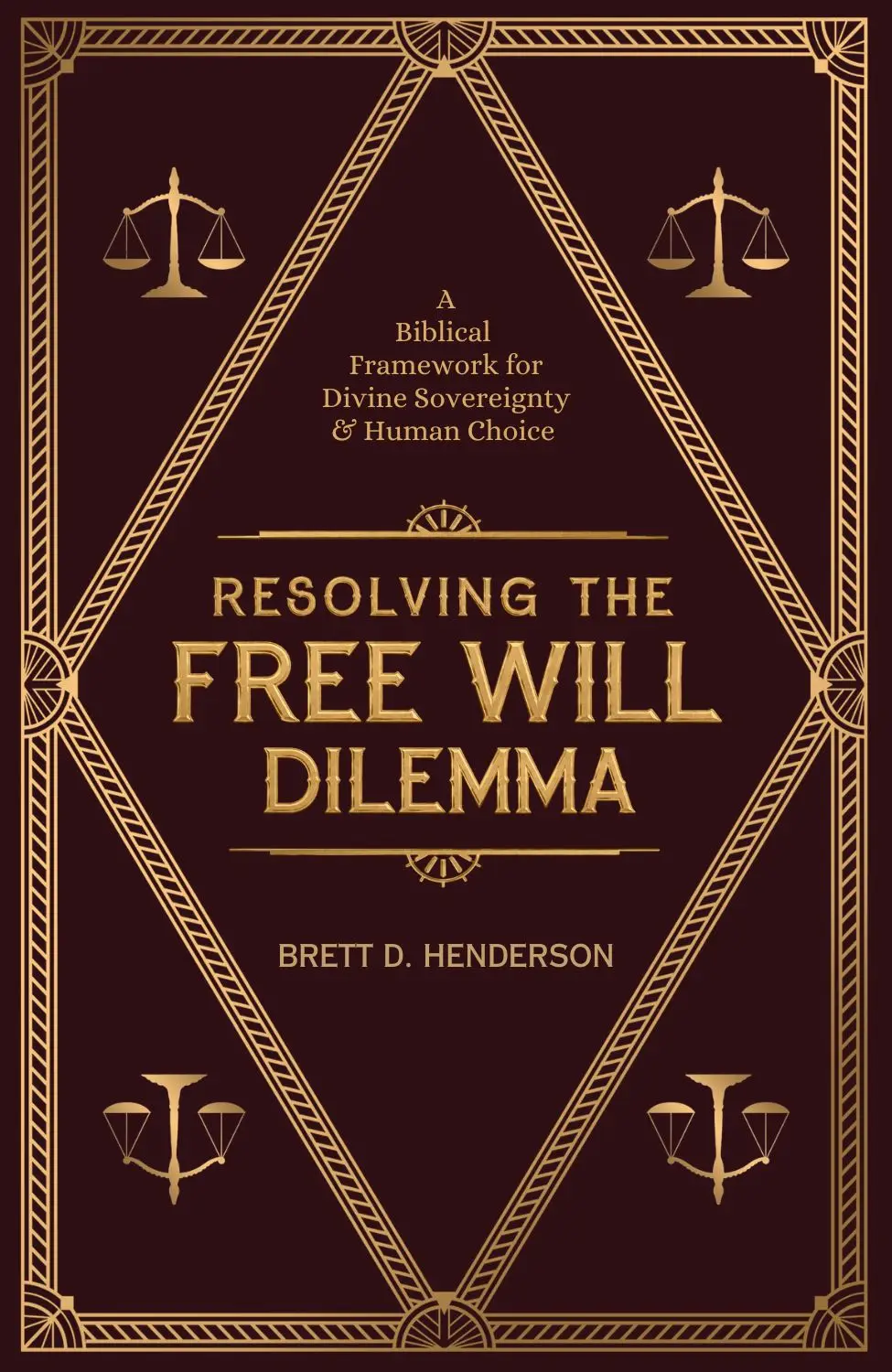
Cover of Resolving the Free Will Dilemma

The Many Beings Framework Volume One

Resolving the Free Will Dilemma

A Biblical Framework for Divine Sovereignty and Human Choice

Calvinism, Arminianism and Molinism are not three competing answers to one question. They are three frames answering three different questions — and each is right inside its own. This volume shows why the debate has lasted five hundred years without resolving, and what happens to it once freedom is indexed to the frame that fixes its meaning. If you have argued this before, you know how it ends — both sides restating premises the other never granted, and everyone leaving exactly where they arrived.

  • Length34 chapters, three parts · ~68,000 words
  • FormatsKindle, paperback, hardcover, audiobook
  • ReadsStandalone — no prior volume required
  • MethodStated definitions, shown inferences, Sola Scriptura grounding

The Kindle edition is free, permanently. Start here and test the framework before spending anything.

There is no risk to weigh here. It is not a sample, a summary or a trial — it is the complete book, free on Kindle, permanently. If the method does not hold up, you have lost an evening and nothing else.

What this volume argues

  • How divine sovereignty and libertarian free will both hold in full, without diluting either — and why every system that “solves” the tension does so by quietly sacrificing one side.
  • Why compatibilism and hard determinism both concede too much, and how frame-indexing preserves genuine agency without shrinking God’s decree by a degree.
  • What predestination and divine foreknowledge actually entail once “free” and “sovereign” are indexed to their frames, and why future contingents pose no threat to omniscience.
  • A precise answer to theological fatalism — the objection that if God already knows your choice, the choice is an illusion.
  • Why Molinism’s middle knowledge becomes unnecessary rather than wrong, once the frames are separated.
  • Where the argument touches original sin, moral responsibility, human effort, perseverance, divine hiddenness and hermeneutics — each carried through rather than gestured at.

Inside the book

The complete table of contents. Part One is the framework itself, shared across the series and tailored here to free will. Parts Two and Three are unique to this volume.

Part One — The Many Beings Framework

The machinery, built from two axioms. Read this once and it carries across every volume in the series.

  1. Argument Summary
  2. Beings and Intrinsic Qualities
  3. Defining the Core Concepts
  4. The Natures of God and Man
  5. Nature Determines Perception
  6. Incompatibility of Frames and Terms
  7. The Many Beings Fallacy
  8. A New Foundation
  9. The True Source of Tension
  10. The Ontology of the Framework

Part Two — Resolving the Free Will Dilemma

The framework applied, one contested doctrine at a time.

  1. Defining Frame-Specific Terms
  2. Resolving Free Will and God’s Sovereignty
  3. Resolving Theological Fatalism
  4. Conclusions on Predestination
  5. Conclusions on Calvinism
  6. Conclusions on Arminianism
  7. Resolving Compatibilism vs. Incompatibilism
  8. Conclusions on Molinism
  9. Conclusion on Original Sin
  10. Conclusions on Fallen Nature
  11. Conclusions on Moral Responsibility
  12. Conclusions on Human Effort
  13. Conclusions on Losing Salvation
  14. Conclusions on Divine Hiddenness
  15. Conclusions on Hermeneutics

Part Three — Historical and Contemporary Views

The tradition engaged directly, and at its strongest rather than in summary.

  1. Augustine on Will and Grace
  2. Thomistic Compatibilism
  3. Calvin on Sovereignty
  4. Edwards’ Determinism
  5. Arminianism and Finite Agency
  6. Wesley and Arminianism
  7. Plantinga and Libertarianism
  8. Kane and Event-Causal Libertarianism
  9. Final Conclusions

Who this is for

Christians who take arguments seriously
You have argued the sides, watched the debates, and walked away sensing the real issue was never actually addressed. This is the argument itself, not another summary of the camps.
Apologists, lay or trained
You need a precise answer to fatalism and to the “sovereignty contradicts choice” objection — one that holds under pressure instead of retreating to mystery.
Pastors, teachers and students
You want a Scripture-anchored framework you can teach and defend line by line.
Philosophers and academics
You want the formal backbone: definitions stated, inferences shown, conclusions open to refutation strictly on the merits.

Not for: readers looking for a devotional treatment, or for a gentle introduction to the debate. This volume assumes you already know what compatibilism claims.

It costs nothing to test the argument.

The Kindle edition is permanently free. If the framework does not hold, you will know quickly and you will have lost nothing — which is rather the point of publishing the inferences rather than asserting the conclusions.

Free — the complete book

Have it in your inbox in a minute.

The complete book, free. No sample, no summary — all 34 chapters.

No spam. Unsubscribe in one click.

Before you start

Questions readers ask first.

Do I need to read the other volumes first?

No. Every volume in the series reads standalone, and this is the one written to be read first. Part One builds the framework from its two axioms, so nothing is assumed.

If you go on to the other volumes you will find Part One again in each, tailored to that dilemma. That repetition is deliberate — it means no volume depends on another.

Which side is this on — Calvinist or Arminian?

Neither, and that is the actual claim rather than a diplomatic dodge. The argument is that both positions are correct within the frame each is describing, and that the dispute persists because “freedom” is being predicated univocally across two incommensurable frames.

A Calvinist will find divine sovereignty affirmed without qualification. An Arminian will find libertarian free will affirmed as genuinely libertarian rather than redefined into compatibilism. Neither will find their opponent conceded to.

How is this different from the four-views books, or from Craig on Molinism?

The multi-view collections put four essays between two covers and let them talk past each other. This is one position argued straight through, with the definitions stated and the inferences shown so you can attack a specific step.

On Molinism specifically: the conclusion is not that Craig is wrong but that middle knowledge becomes unnecessary once the frames are separated — it is solving a problem that indexing dissolves. Chapter 18 takes that directly.

Is it too technical for a layperson?

It is a formal argument, not a devotional treatment: expect stated definitions, shown inferences and engagement with the primary literature. It assumes you already know roughly what compatibilism claims, and what libertarian free will is supposed to add to it.

That said, the notation supports the prose rather than replacing it. If you have followed the debates and read the popular treatments, you will be able to follow this.

Why is the Kindle edition free?

Because the framework is the product, not the book. The fastest way to find out whether the argument holds is to read it, and putting a price in front of that slows the only thing worth optimising for.

The paperback, hardcover and audiobook are paid. The Kindle edition is permanently free.

Cover of Resolving the Free Will Dilemma

Free — the complete book

Prefer it by email?

Get the same book sent straight to you, and hear first when the remaining volumes land.

No spam. Unsubscribe in one click.