Unconditional Election: Who the Elect Are and Why God Chose
Unconditional Election: Who the Elect Are and Why God Chose
Unconditional election is the Reformed doctrine that God, before He made the world, chose particular people for salvation on the ground of His own will and grace alone, with nothing foreseen in them as the reason, faith included. Its rival, conditional election, holds that God chose those He foreknew would believe, as Jacobus Arminius and the Remonstrants taught. Both sides read the same Scriptures, and their dispute turns on three words said of God and of us: "before", "foreknew" and "choose". The Many Beings Framework holds that each side reports one frame of a single reality truly, and that the deadlock dissolves once those words carry the frame they are said from.
Key takeaways
- Unconditional election grounds God's choice in His good pleasure. The Canons of Dort deny that election rests on "foreseen faith," and Westminster 3.5 denies that anything in the creature moved God to choose.
- The elect are the people God has chosen in Christ. Calvinists and Arminians agree on that and divide over what grounds the choice.
- Its critics press real texts. Arminians ground election in foreknown faith, corporate election in Christ's people, Molinism in middle knowledge, and the Arminian asks whether an unconditioned choice is arbitrary.
- Frame-Indexed Classical Theism keeps both sides. Set beside Arminianism and Molinism, it holds that election rests wholly on God's will in His frame while faith is a free and resistible response in ours.
What is unconditional election?
Unconditional election, sometimes called sovereign election, is the teaching that God's choice of whom He will save depends on His own will and on nothing He foresees in the people He chooses. It is the second of the five points of Calvinism, the U in TULIP, and it answers a narrow question: why these persons? The Reformed answer is that the reason lies in God, and the rest of the system follows from where it places that reason.
The word "unconditional" is easy to misread. R. C. Sproul drew the line carefully: faith is a condition a person must meet to be justified, and nobody is saved without believing. Election is the decision behind that faith, and Sproul put it this way: "God does not foresee an action or condition on our part that induces Him to save us." The doctrine qualifies the ground of God's choice and leaves the gospel's call to believe in full force.
The Westminster Confession gives the classic statement:
Free — the complete book
Get Volume One free.
The complete book, not a sample. The fastest way to test whether the framework holds.
No spam. Unsubscribe in one click.
"Those of mankind that are predestinated unto life, God, before the foundation of the world was laid, according to his eternal and immutable purpose, and the secret counsel and good pleasure of his will, hath chosen, in Christ, unto everlasting glory, out of his mere free grace and love, without any foresight of faith, or good works, or perseverance in either of them, or any other thing in the creature, as conditions, or causes moving him thereunto; and all to the praise of his glorious grace." (Westminster Confession 3.5)
The Canons of Dort compress the same claim into a clause: the cause of election "is exclusively the good pleasure of God."
Who are the elect?
In Scripture, the elect are the people God has chosen. The Greek word behind the English is eklektos, "chosen" or "selected," and it gathers three groups: Israel as a nation, Christ, chosen before the creation of the world (1 Peter 1:20), and the church that belongs to Him. The Old Testament pattern already grounds the choice in God's love:
"The Lord did not set his affection on you and choose you because you were more numerous than other peoples, for you were the fewest of all peoples. But it was because the Lord loved you and kept the oath he swore to your ancestors that he brought you out with a mighty hand and redeemed you from the land of slavery, from the power of Pharaoh king of Egypt." (Deuteronomy 7:7–8, NIV)
Peter gives the name to believers:
"Peter, an apostle of Jesus Christ, To God's elect, exiles scattered throughout the provinces of Pontus, Galatia, Cappadocia, Asia and Bithynia, who have been chosen according to the foreknowledge of God the Father, through the sanctifying work of the Spirit, to be obedient to Jesus Christ and sprinkled with his blood: Grace and peace be yours in abundance." (1 Peter 1:1–2, NIV)
Paul asks, "Who will bring any charge against those whom God has chosen?" (Romans 8:33). So the elect of God are believers, chosen by God in a sense Calvinists and Arminians confess alike. Unconditional election answers the next question: what grounds that choice for each person.
Where did the doctrine of unconditional election come from?
The doctrine begins with a change of mind. Augustine of Hippo, early in his ministry, held that faith was the human contribution that received God's gifts. In On the Predestination of the Saints he confessed he had once been in error, "thinking that faith whereby we believe in God is not God's gift, but that it is in us from ourselves," a view he had set down "in some small works of mine written before my episcopate." What changed his mind was a single question from Paul:
"For who makes you different from anyone else? What do you have that you did not receive? And if you did receive it, why do you boast as though you did not?" (1 Corinthians 4:7, NIV)
If faith itself is received, it cannot be the ground on which God chooses. Augustine drew the distinction that has governed the discussion since: "predestination is the preparation for grace, while grace is the donation itself." In the same work he argued that the elect are called in order that they may believe, and chosen so that they would become holy.
The doctrine is older and wider than the Reformation. Thomas Aquinas argued that foreseen merits cannot cause predestination as a whole, "because whatsoever is in man disposing him towards salvation, is all included under the effect of predestination." John Calvin pressed the same point in the Institutes, Book 3, chapter 22, against those who "imagine that God distinguishes between men according to the merits which he foresees," and he left "no place for the vain argument of those who defend the foreknowledge of God against the grace of God."
The Belgic Confession, published in 1561, gave the doctrine confessional form. Arminius presented his Declaration of Sentiments in 1608, his followers issued the Remonstrance in 1610, and the Synod of Dort, meeting in 1618 and 1619, answered them in the First Main Point of its Canons. The Westminster Assembly confirmed the doctrine for English-speaking Presbyterians in 1646. The wider story of that Reformed tradition runs well beyond election.
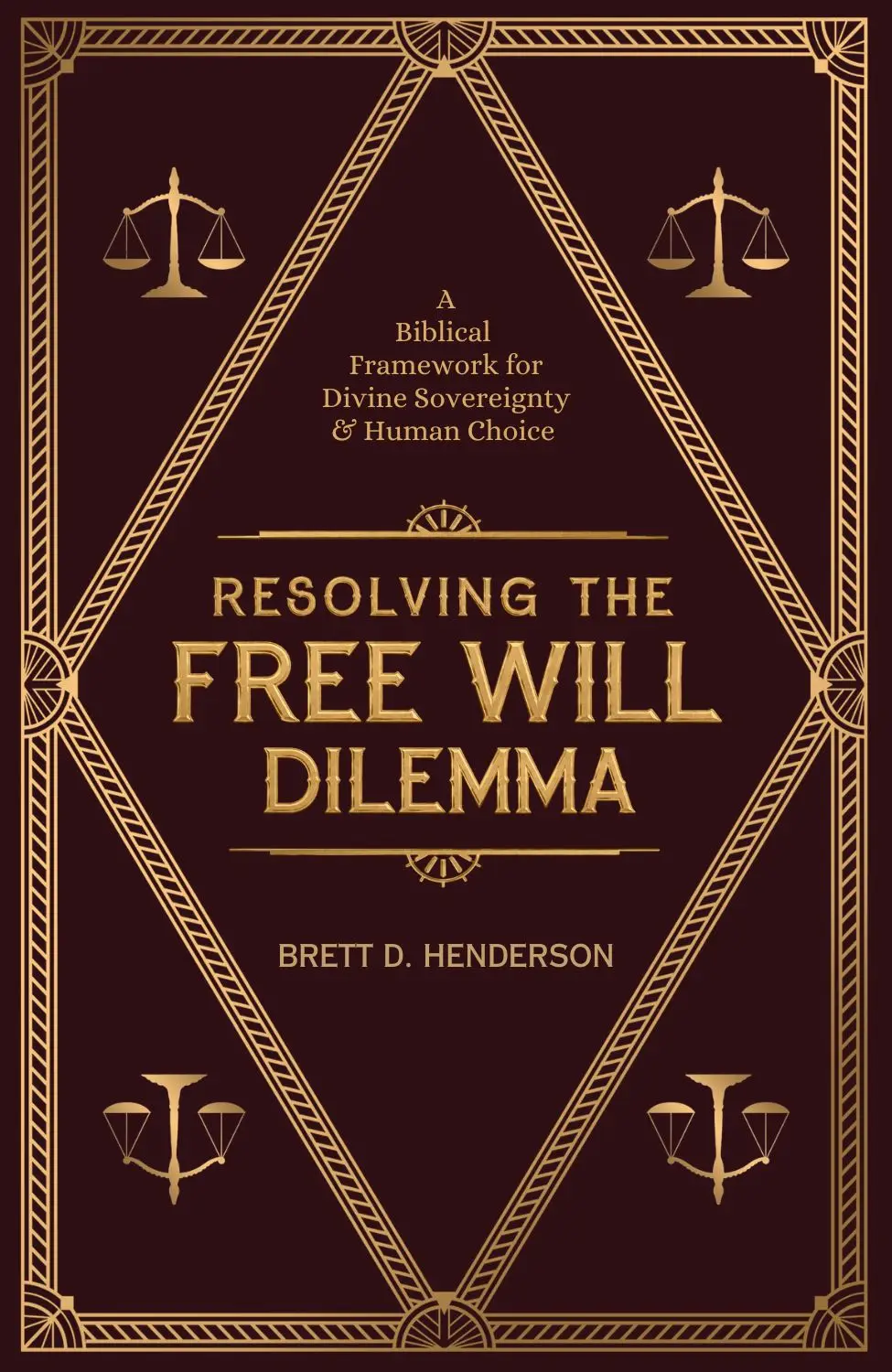
Volume One, Resolving the Free Will Dilemma, gives Augustine and Calvin a chapter each.
What does the Bible say about unconditional election?
The Reformed case rests on a handful of texts, and each one places God's choosing ahead of the believer's believing. The first is Paul's blessing at the opening of Ephesians:
"For he chose us in him before the creation of the world to be holy and blameless in his sight. In love he predestined us for adoption to sonship through Jesus Christ, in accordance with his pleasure and will." (Ephesians 1:4–5, NIV)
The choice is dated before creation, it is made "in love," and its stated ground is God's "pleasure and will." The second text is the chain in Romans 8, where each link is an act of God:
"For those God foreknew he also predestined to be conformed to the image of his Son, that he might be the firstborn among many brothers and sisters. And those he predestined, he also called; those he called, he also justified; those he justified, he also glorified." (Romans 8:29–30, NIV)
Reformed interpreters read "foreknew" in the covenant sense the Old Testament gives to "know." Fred Zaspel points to Amos 3:2, where God says of Israel that He has "known" them alone among all the families of the earth, and concludes that in Romans 8:29 "'foreknew' connotes a pre-temporal regarding with divine favor." On this reading God foreknew persons, and He set His love on them.
The center of the case is Romans 9. Paul is grieving for Israel, and he explains why many of his own people have not believed by reaching back to the patriarchs:
"Yet, before the twins were born or had done anything good or bad—in order that God's purpose in election might stand: not by works but by him who calls—she was told, 'The older will serve the younger.' Just as it is written: 'Jacob I loved, but Esau I hated.' What then shall we say? Is God unjust? Not at all! For he says to Moses, 'I will have mercy on whom I have mercy, and I will have compassion on whom I have compassion.' It does not, therefore, depend on human desire or effort, but on God's mercy." (Romans 9:11–16, NIV)
Jesus speaks the same way in John 6: "All those the Father gives me will come to me, and whoever comes to me I will never drive away" (John 6:37), and "No one can come to me unless the Father who sent me draws them, and I will raise them up at the last day" (John 6:44). How that drawing works is the subject of effectual calling. At Pisidian Antioch, after the synagogue turned Paul away and he spoke to the Gentiles, "all who were appointed for eternal life believed" (Acts 13:48). Read together, these texts put the appointment first and the believing second, and unconditional election takes that order at face value.
Volume One sets the Reformed reading beside its rivals from the ground up, and you can download it free.
What is conditional election?
Conditional election is the view that God chose for salvation those He foresaw would believe in Christ and persevere. Arminius taught that God elects particular people. His fourth decree states that God "decreed to save and damn certain particular persons," and continues: "This decree has its foundation in the foreknowledge of God, by which he knew from all eternity those individuals who would, through his preventing grace, believe, and, through his subsequent grace would persevere." The Remonstrance of 1610 put the same conviction into its first article: God "hath determined, out of the fallen, sinful race of men, to save in Christ, for Christ's sake, and through Christ, those who, through the grace of the Holy Ghost, shall believe on this his son Jesus, and shall persevere in this faith and obedience of faith, through this grace, even to the end."
The Arminian case has texts of its own. Peter's readers were chosen "according to the foreknowledge of God the Father" (1 Peter 1:2), and Arminians read Romans 8:29 the same way: God foreknew believers as believers. Ephesians 1:4 says God chose us "in him," which Arminians read as election through union with Christ, a union entered by faith. Above all they point to the breadth of God's desire:
"This is good, and pleases God our Savior, who wants all people to be saved and to come to a knowledge of the truth." (1 Timothy 2:3–4, NIV)
Peter adds that the Lord is "not wanting anyone to perish, but everyone to come to repentance" (2 Peter 3:9). The Arminian account of the grace that makes the foreseen faith possible is prevenient grace.
The moral case follows from these texts. The Society of Evangelical Arminians argues that for election to be unconditional "seems to make God's choice of any particular individual as opposed to another arbitrary." If God desires all to be saved, a choice that rests on nothing in the chosen appears to set His decree against His desire.
The defender of unconditional election replies just as directly. Romans 9:11 places the choice before Jacob and Esau "had done anything good or bad," and a choice of that kind leaves foreseen faith no room to act as its cause. Westminster 3.2 teaches that God has not "decreed anything because he foresaw it as future." Calvin's charge was that foreknowledge had been set against grace, since a faith that grounds election becomes the one thing the saved contributed. The two systems are set side by side in the article on Calvinism and Arminianism.
Corporate election and the Molinist alternative
Corporate election holds that God's choice falls first on a people, the church in Christ, and that individuals share in that election by being joined to Christ through faith. William W. Klein set out the view in The New Chosen People (1990), and Brian Abasciano defended it in the Journal of the Evangelical Theological Society in 2006. Abasciano argues from the Old Testament pattern, in which God chose Israel in its covenant head, so that "individuals are elect only as members of the elect people." In Ephesians 1:4 the church is chosen in Christ, its covenant representative. Abasciano notes that several recent commentators on Romans, among them N. T. Wright, Joseph Fitzmyer and Ben Witherington, find that Paul there is not speaking of the eternal fate of individuals specifically.
Thomas Schreiner had already answered the view in the same journal in 1993. He argued that the election of Romans 9 is "both corporate and individual." His sharper point was that a group chosen before it existed, and apart from its works, receives its faith as God's gift, and that choosing one group over another is no less selective than choosing persons. Proponents of the corporate view keep the advantage they value most, the grounding of election in Christ, and they owe an account of how a chosen people comes to have its members.
Molinism takes a different route. On that view God knows by middle knowledge what every possible free creature would do in any circumstance, and He chooses which world to create in light of that knowledge. William Lane Craig weighs corporate election and says, "I do not think that corporate election is the whole story," since Acts 13:48 speaks of individuals. He puts the result this way: "God could have elected to save all persons, but he has chosen to create a world in which he knew some would freely reject him." Election is then God's choice of a world, and within it each person's response is free.
Arminianism and Molinism each get a full hearing in Volume One, whose page describes the argument chapter by chapter.
Is unconditional election fair?
Its defenders answer yes: no one is owed salvation, so a choice that saves some wrongs no one. Its critics answer that a God who wants all people saved has set His decree against His own desire. Paul faced the objection first. Having said that God has mercy on whom He wills, he hears the reply at once:
"One of you will say to me: 'Then why does God still blame us? For who is able to resist his will?' But who are you, a human being, to talk back to God? 'Shall what is formed say to the one who formed it, "Why did you make me like this?"' Does not the potter have the right to make out of the same lump of clay some pottery for special purposes and some for common use?" (Romans 9:19–21, NIV)
The case for unconditional election begins from grace. Sproul gave the reply its best-known form: "One group receives grace; the other receives justice. No one receives injustice." Dort adds that "the fact that some receive from God the gift of faith within time, and that others do not, stems from his eternal decree."
The Arminian finds that reply incomplete. Grace owed to none settles who may complain, and it leaves the tension between the decree and a God who "wants all people to be saved" where it was. That further question concerns reprobation, which is a doctrine in its own right and is treated under double predestination. Westminster itself asks that the doctrine be "handled with special prudence and care," and it grounds a believer's assurance in the certainty of the call a believer has received.
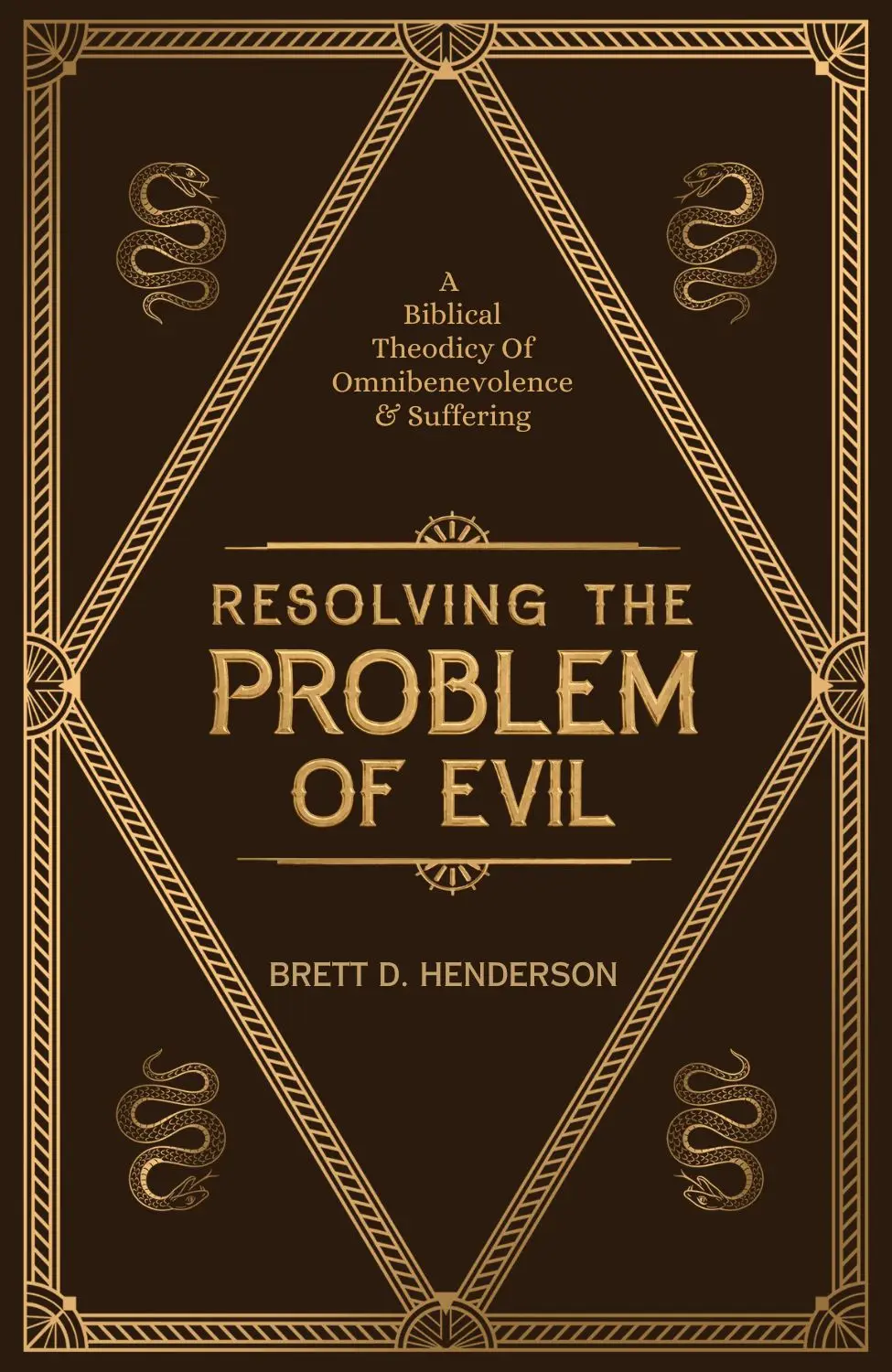
Volume Two, Resolving the Problem of Evil, takes up how God's justice and mercy stand together.
How does Frame-Indexed Classical Theism resolve it?
Frame-Indexed Classical Theism (FICT) is a research program in analytic theology that resolves classical theological dilemmas by diagnosing them as artifacts of a single formal error. It is the Many Beings Framework's position. Reformed unconditional election is right that nothing in the creature grounds God's choice, and Augustine's reversal on faith shows why. Arminian conditional election holds, with equal warrant, that no one is saved without believing, and that believing is a real act addressed by real commands. Molinism sees truly that God's knowledge of free creatures is complete. FICT holds that the first two can both be kept whole, without middle knowledge to hold them together.
In brief, the framework holds that there is one reality. God apprehends it in His own perceptual frame: atemporal, simple, and dependent on nothing. We apprehend that same reality in the human frame: sequential, composite, and contingent. Terms whose content involves time, possibility, agency, freedom or value are said of the two frames analogically, in related senses that differ. The Many Beings Fallacy is treating such a term as though it meant the same thing in both. Volume One makes that argument in full before applying it to any dilemma.
Take "before." Said of us, it places one event earlier on a timeline than another. Said of God, "before the creation of the world" (Ephesians 1:4) marks that His choice depends on nothing in creation, and it assigns the choice no date on our calendar. Election is prior to faith in the order of ground: it is the reason there is faith in the elect at all.
The same holds for "foreknew." Said of us, foreknowledge is knowing what has not yet happened. God has no "not yet." The picture of God looking ahead, seeing who believes and then deciding, sets His act inside our sequence. Read in God's frame, "foreknew" is His eternal knowing of those who are His, and that knowing grounds their faith without waiting on it. Dort's denial that election rests on "foreseen faith" stands in full.
"Choose" follows the pattern. When we choose, we pick among options already there, for something in them. When God chooses, the choosing gives being and grace to what is chosen, so nothing in the creature can stand as its ground.
Now come to our frame. There, faith is a free act of a real person, one that could have gone otherwise, and grace can be resisted. "Whoever believes in him shall not perish but have eternal life" (John 3:16) states a true condition, met in time by people who answer for their response. Conditional election reports the order in which salvation is received. Unconditional election reports its ground. Each reports one frame truly, and the contradiction appears when the three words are given one sense across both.
Critics will press from both sides. A Reformed reader will say that if faith is free in our frame, the creature has become decisive. The framework answers that dependence and decisiveness are relations in time, said from our frame, and God's one act comprehends the creature's choice without waiting on it. An Arminian will say that a choice resting on nothing in me still looks arbitrary. The answer there is that an arbitrary choice lacks a reason, and God's reason is His own love and will, "in accordance with his pleasure and will" (Ephesians 1:5). The pressure remains on both sides, and Volume One argues the point at length. The statement of Frame-Indexed Classical Theism sets out the position in one place.
Volume One makes this case from first principles; get your free copy.
How the positions compare
Each position guards something Scripture teaches.
| Position | Ground of election | What it gets right | What it leaves open |
|---|---|---|---|
| Reformed unconditional election | God's good pleasure alone | Faith is a gift; no ground for boasting | How a sincere universal desire fits a particular choice |
| Arminian conditional election | God's foreknowledge of faith | Faith is a real, resistible response | How foreseen faith avoids becoming a contribution |
| Corporate election | God's choice of a people in Christ | Election is in Christ and covenantal | How individuals come to be members of the chosen people |
| Molinism | God's choice of a world known through middle knowledge | God's knowledge of free creatures is complete | What grounds the truths of middle knowledge |
| Frame-Indexed Classical Theism | God's will in His frame; faith a free response in ours | Keeps both the ground and the response | Fails if a text needs "foreknew" to mean a sequence in God |
Frequently asked questions
What is the difference between conditional and unconditional election?
Unconditional election holds that God chose whom He would save on the ground of His will and grace alone, with no foreseen faith as the reason. Conditional election holds that God chose those He foreknew would believe and persevere. Both agree that nobody is saved without faith. They disagree over whether faith is the ground of God's choice or its fruit. Frame-Indexed Classical Theism reads the first as true of God's frame and the second as true of the order in which we receive salvation.
What does "elect" mean in the Bible?
"Elect" translates the Greek eklektos, meaning chosen or selected. The Old Testament calls Israel God's chosen people, and Peter says Christ Himself was chosen before the creation of the world. The New Testament applies it to believers: Peter writes "to God's elect," and Paul speaks of "those whom God has chosen." Calvinists and Arminians agree that believers are the elect of God. They differ over what grounds God's choice of each person.
Is unconditional election the same as double predestination?
No. Unconditional election concerns those God chose to save and why He chose them. Double predestination concerns the rest: whether God actively decrees the condemnation of the non-elect or passes them by and leaves them in their sin. A Christian can affirm unconditional election and still hold that reprobation is a passing over. The article on double predestination sets out that further doctrine and its debates.
Does unconditional election make evangelism pointless?
The Reformed confessions say unconditional election does the reverse. Westminster teaches that God, having appointed the elect to glory, "foreordained all the means thereunto," and preaching is one of those means. Acts 13:48, quoted above, describes what happened while Paul was preaching to the Gentiles of Pisidian Antioch. On the Reformed view God has people to call, and the church calls them through the gospel.
How can someone know they are one of the elect?
Westminster answers that believers may, "from the certainty of their effectual vocation, be assured of their eternal election." Assurance comes by way of the call they have received and answered: faith in Christ and a life being changed by Him. Arminian and Reformed Christians differ on whether that assurance can later be lost, a question taken up under perseverance of the saints.
Where to go from here
The elect confess two things about their salvation. They were chosen, before they had done anything good or bad, and they chose, answering a call they could have refused. For four centuries unconditional election and conditional election have been held against each other, each side guarding one confession against the other. Both are true of one salvation, said from two frames.
Volume One of the Many Beings Framework argues the case in full and is free to download. The rest of the series carries the same reading through evil, time and divine changelessness.