What Is Calvinism? Beliefs, Meaning, and Objections
What Is Calvinism? Beliefs, Meaning, and Objections
Calvinism is the Protestant tradition, also called Reformed theology, which teaches that God is sovereign over all things and that salvation is His work of grace from beginning to end. It takes its name from the sixteenth-century reformer John Calvin, and Presbyterian churches, Reformed churches and a good number of Baptists hold it today. Its teaching on salvation is often gathered into five points. For four centuries serious Christians have pressed hard objections against it, and serious Christians have answered them. What follows sets out what the tradition believes, why others reject it, and a way of reading the debate that keeps the Scripture each side relies on.
Key takeaways
- Calvinism is the Reformed tradition of Protestant theology. Its center is God's sovereignty over all things, salvation included.
- Its beliefs are gathered in five points. Total depravity, unconditional election, limited atonement, irresistible grace and perseverance of the saints.
- It is held by Presbyterian, Reformed and many Baptist churches. Methodists and other Arminian churches hold the main alternative.
- Its strongest objection is that God wants all people saved; Frame-Indexed Classical Theism reads Reformed theology and Arminianism as both true of one reality. The Reformed view describes salvation as God knows it; the Arminian view describes it as we live it.
What is Calvinism?
Calvinism is a major branch of Protestant Christianity that began in the Reformation of the sixteenth century, and its churches usually prefer to call it Reformed Christianity. As a working definition of Calvinism, we can say this: it is the view that God rules over all that happens, and that in salvation God alone makes the decisive difference. A sinner is saved because God chose him, Christ died for him and the Holy Spirit gave him new life, and faith is the fruit of that work.
The meaning of "Calvinist" in everyday speech follows from this. A Calvinist is a person who holds this account of God's sovereignty and grace, and the word is also used of churches, confessions and seminaries that teach it. Many who hold it seldom use the label. They call themselves Reformed, Presbyterian or simply Christian, and they would say they are following Paul and Augustine more than any single reformer.
The tradition is wider than one doctrine. It carries a view of Scripture, worship, the church and the Christian life. Most people who search for the word, though, have met it in the argument over predestination and free will, and that argument is where this page stays.
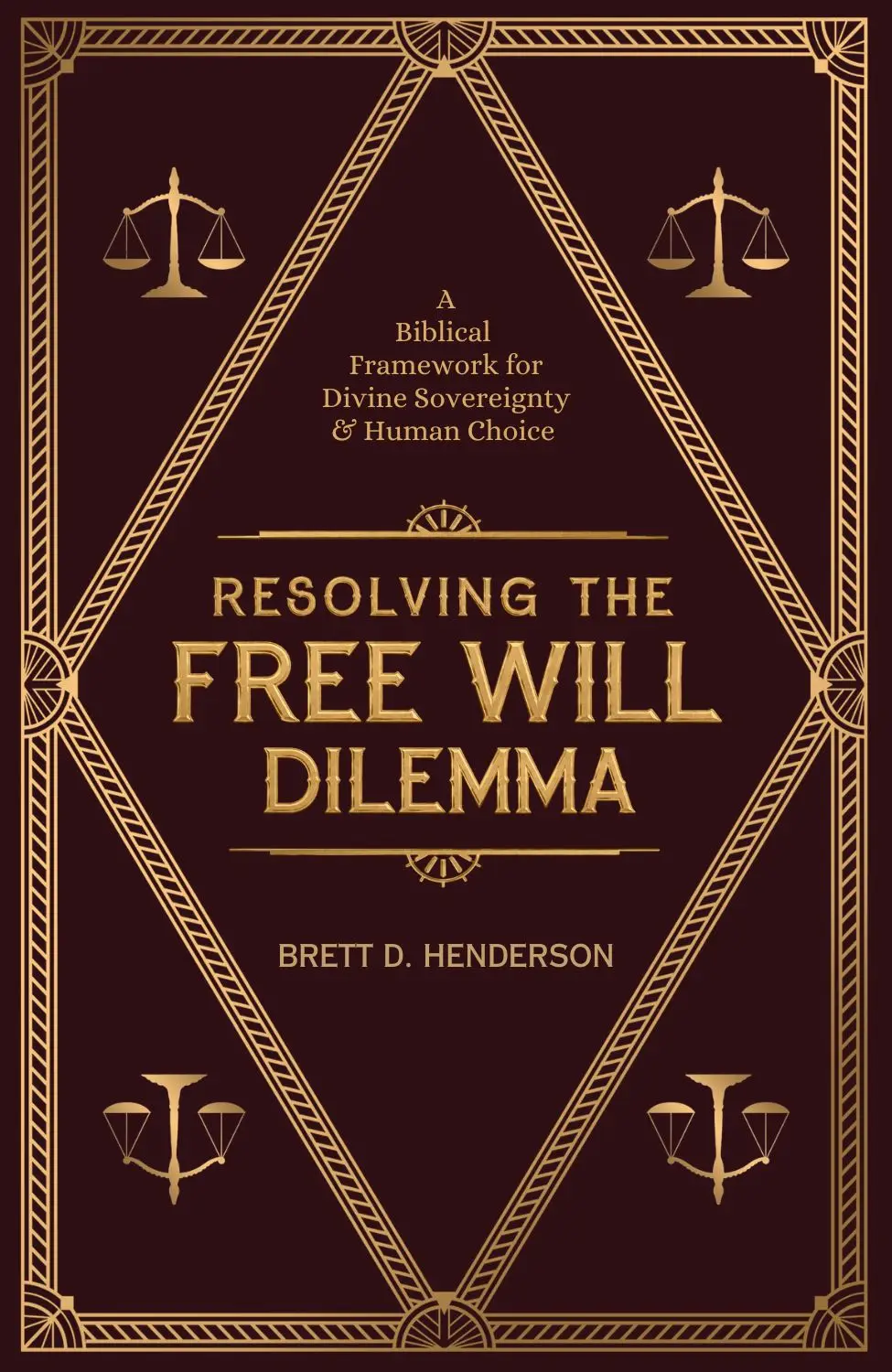
Free — the complete book
Get Volume One free.
The complete book, not a sample. The fastest way to test whether the framework holds.
No spam. Unsubscribe in one click.
What do Calvinists believe?
Start with God. Reformed Christians hold, first, that He governs all things by His own plan. The Westminster Confession of Faith, the standard of Presbyterian churches since the 1640s, puts it this way: "God, from all eternity, did, by the most wise and holy counsel of his own will, freely, and unchangeably ordain whatsoever comes to pass." On this view no event in history falls outside that counsel, the salvation of each person included.
Second, that sin has left human beings unable to come to God on their own. The Reformed read Jesus's words in the bread of life discourse as a statement of that inability and of its remedy:
"No one can come to me unless the Father who sent me draws them, and I will raise them up at the last day." (John 6:44, NIV)
Third, that God chose His people for salvation before they had done anything, good or bad. Paul opens his letter to the Ephesians in praise of that choice:
"For he chose us in him before the creation of the world to be holy and blameless in his sight." (Ephesians 1:4, NIV)
From these convictions come the five points, the best-known summary of Calvinist beliefs:
- Total depravity: sin affects every part of a person, so no one turns to God unaided.
- Unconditional election: God chose whom He would save on the ground of His grace, apart from anything foreseen in them.
- Limited atonement: Christ died to secure the salvation of the elect in particular.
- Irresistible grace: the Spirit's call to the elect brings them surely to faith.
- Perseverance of the saints: those God saves, He keeps to the end.
Each of the five points, with its strongest objection, is set out in the article on TULIP.
Where does the name come from, and who holds it today?
John Calvin was a French reformer, born in 1509 at Noyon, who spent most of his working life in Geneva and died there in 1564. His Institutes of the Christian Religion, first published in 1536, became a foundational work of Protestant theology. The name came later and from outside. Opposing Lutherans first used the label in the 1550s, and Calvin himself disliked it. The tradition also drew on reformers such as Huldrych Zwingli and Martin Bucer.
The five points came after Calvin as well. At the Synod of Dort (1618–1619), Dutch Reformed churches answered five articles drawn up by the followers of Jacobus Arminius, and their answers became the five points. The acronym TULIP came much later and was in use as early as about 1905.
Today the tradition lives in Continental Reformed, Presbyterian and Congregational churches, and in parts of the Anglican and Baptist worlds. A 2011 estimate put members of Presbyterian and Reformed churches at about 56 million people worldwide. The debate is live among Baptists in particular: in a 2012 Lifeway Research survey, 30 percent of Southern Baptist pastors described their church as Reformed or Calvinist, and 30 percent described theirs as Arminian or Wesleyan.
For the confessions, the branches and the fuller history, see the complete account of Calvinism.
How is Calvinism different from Arminianism?
Arminianism is the main Protestant alternative. The two part over how grace works: the Arminian holds that God's grace enables everyone to respond, the Reformed Christian that it gives new life to those He has chosen. Arminianism takes its name from Jacobus Arminius (1560–1609), a Dutch Reformed theologian, whose followers set out their objections in the Remonstrance of 1610. John Wesley gave the tradition its largest modern following, and today it is held in Methodist churches, the Church of the Nazarene, the Assemblies of God, the Free Will Baptists and the Salvation Army.
The two traditions agree on more than their quarrel suggests. Both hold that sin leaves a person unable to come to God without grace, and both hold that salvation is by grace through faith in Christ.
The Arminian holds that God gives prevenient grace, grace that goes before and enables a response, to all people, so that each person is truly able to believe or to refuse. God elects those He foreknows will believe, and His grace can be resisted. The Reformed Christian holds that God gives new life to those He has chosen, so that they surely believe. Election rests on God's choice alone, and His saving call is effective.
Each side quotes real Scripture, and each has had to explain the other's texts for four hundred years.
What are the common misunderstandings of Calvinism?
Three worries meet most newcomers: fatalism, the loss of any reason to evangelize, and the loss of real choice. Reformed churches have answered each in their confessions and their history.
The first worry is fatalism: the outcome will come whatever anyone does, so action is idle. The Reformed view holds that God ordains the means along with the ends, and that He works through human choices. The Westminster Confession says so directly: "Although, in relation to the foreknowledge and decree of God, the first Cause, all things come to pass immutably, and infallibly; yet, by the same providence, he ordereth them to fall out, according to the nature of second causes, either necessarily, freely, or contingently."
The second worry is that a believer in election has no reason to evangelize. The Reformed reply is that election is the reason to preach, since God has people to call. Paul, facing opposition in Corinth, was told:
"One night the Lord spoke to Paul in a vision: 'Do not be afraid; keep on speaking, do not be silent. For I am with you, and no one is going to attack and harm you, because I have many people in this city.'" (Acts 18:9–10, NIV)
William Carey, a Particular Baptist of Reformed convictions, published his Enquiry on the duty to use means for the conversion of the nations in 1792, helped found the Baptist Missionary Society that year, and sailed for India in 1793.
The third worry is that people make no real choices. The same Confession teaches that the human will "is neither forced, nor, by any absolute necessity of nature, determined to good, or evil." People choose what they want; the Reformed claim is that the fallen will wants God only after grace renews it.
The worry does describe one real position, which has its own name: hyper-Calvinism, which stresses God's sovereignty at the expense of human responsibility and denies that the gospel should be offered to all. Mainstream Reformed churches reject it.
Why do many Christians reject Calvinism?
The objections are strong, and three carry the most weight: that God wants all people saved, that blame requires a real alternative, and that a God who ordains everything ordains sin. John Wesley pressed them in the eighteenth century, and Arminian scholars such as Roger E. Olson argue them today.
Start with God's love for all. Paul writes to Timothy:
"This is good, and pleases God our Savior, who wants all people to be saved and to come to a knowledge of the truth." (1 Timothy 2:3–4, NIV)
If God wants all people saved, and if His grace cannot fail wherever He gives it, the critic asks why He withholds it from some. The Reformed reply distinguishes what God desires in His revealed will from what He has decreed, and the critic answers that a desire God could fulfill and chooses to leave unfulfilled is hard to call love.
Responsibility comes next. If no one can come unless the Father draws, and the Father draws effectually only the elect, how can the rest be blamed for refusing? The Reformed reply is that they refuse because they want to refuse, and that responsibility requires a will acting on its own desires. The critic answers that a person who could never have wanted otherwise has been given no real alternative.
Then there is sin itself. If God ordains whatever comes to pass, He appears to ordain every sin. The Westminster Confession denies that God is the author of sin in the same section that affirms His decree. The critic grants the denial and asks for the explanation.
Each side holds texts the other must work to explain, and that is often the mark of a question that has been framed in the wrong terms.
Volume One of the series takes up this question from its foundations; read it free.
How does Frame-Indexed Classical Theism read the debate?
Frame-Indexed Classical Theism (FICT) is a research program in analytic theology that resolves classical theological dilemmas by showing that each rests on one repeated error. It is the position of the Many Beings Framework. On salvation it stands beside three established answers. Calvinism grounds salvation in God's eternal decree. Arminianism grounds it in grace-enabled human response. Molinism grounds it in God's knowledge of what free creatures would do in any circumstance. FICT holds that the Reformed and the Arminian accounts each describe one reality truly, from different frames.
The framework's conclusions begin with this: there is one reality. God knows it in His own frame, which is timeless, simple (without parts) and self-existent. We know that same reality in the human frame, which is sequential, composite and dependent. Words such as "choose," "before" and "free" are said of God and of us by analogy: their meanings are related and never identical.
In God's frame there is one eternal act, with no "before" in which He waits to see who will believe, and election is the ground of faith. The Reformed Christian says this truly. In our frame the gospel call is real, faith is a choice that could have gone otherwise, and grace can be resisted. The Arminian says this truly.
The framework affirms exhaustive divine sovereignty and real finite freedom together. The quarrel comes from the Many Beings Fallacy, treating a word such as "choose" as if it meant the same thing said of God and of us, and the dilemma dissolves once each word is kept to its frame.
Critics push back. A confessional Presbyterian will say this grants a freedom the Westminster Confession denies. An Arminian will say certainty in God's frame still fixes the outcome in ours. Others will ask whether this is relativism.
The framework answers that there is one reality with God's frame as its ground, and that the natures of God and man set the difference between the frames before any debate began. Volume One makes the full argument, and the statement of Frame-Indexed Classical Theism gathers the position in one place.
Volume One follows this reading through the whole debate; download your free copy.
Frequently asked questions
Do Calvinists believe in free will?
Yes, in the sense the Westminster Confession gives: the will acts on its own desires and is neither forced nor determined by any necessity of nature. They deny that a fallen person can turn to God unaided; Arminians hold that prevenient grace restores that ability to everyone. The Many Beings Framework adds that "free" is said of God and of us by analogy, so human freedom is real and creaturely, related to God's freedom and distinct from it.
Are Baptists Calvinists?
Baptists hold both views. The Particular Baptists, William Carey among them, were Calvinists, and Reformed Baptist churches continue that line. The Free Will Baptists are Arminian. Southern Baptists are divided: a 2012 Lifeway Research survey found 30 percent of their pastors describing their church as Reformed or Calvinist and 30 percent as Arminian or Wesleyan.
Is Calvinism biblical?
Calvinists point to John 6, Romans 8 and 9 and Ephesians 1, where God chooses, draws and keeps His people. Arminians point to 1 Timothy 2 and 2 Peter 3, where God wants all to be saved. Both are reading Scripture faithfully. The better question is which frame each set of texts describes, and the framework's answer is that both describe one reality, the first as God knows it and the second as we live it.
What is a four-point Calvinist?
The term describes a Calvinist who holds total depravity, unconditional election, irresistible grace and perseverance of the saints, and sets aside limited atonement. Such a Christian believes that Christ died for all people in a real sense, while God's saving purpose is still carried out in the elect.
Is Calvinism the same as Reformed theology?
Largely, yes. "Reformed theology" is the name the tradition's churches prefer, because it points to their confessions and to the Reformation as a whole. The other name was first a label applied by opponents, and Calvin himself disapproved of it. In ordinary use the two terms describe the same body of teaching on God's sovereignty and grace.
Where to go from here
The lasting strength of the Reformed view is that it refuses to let salvation become our achievement. Any way forward has to keep that, and it has to keep the texts in which God pleads with all people and holds them responsible for their answer. Frame-Indexed Classical Theism keeps both, holding the Reformed account of God's decree and the Arminian account of human response together as true of one reality.
Volume One, Resolving the Free Will Dilemma, makes the case in full and is free to download. The five points are treated one by one in TULIP, the fuller history lives in the account of Calvinism, and the series carries the same reading into evil, time and eternity, and God's changelessness.