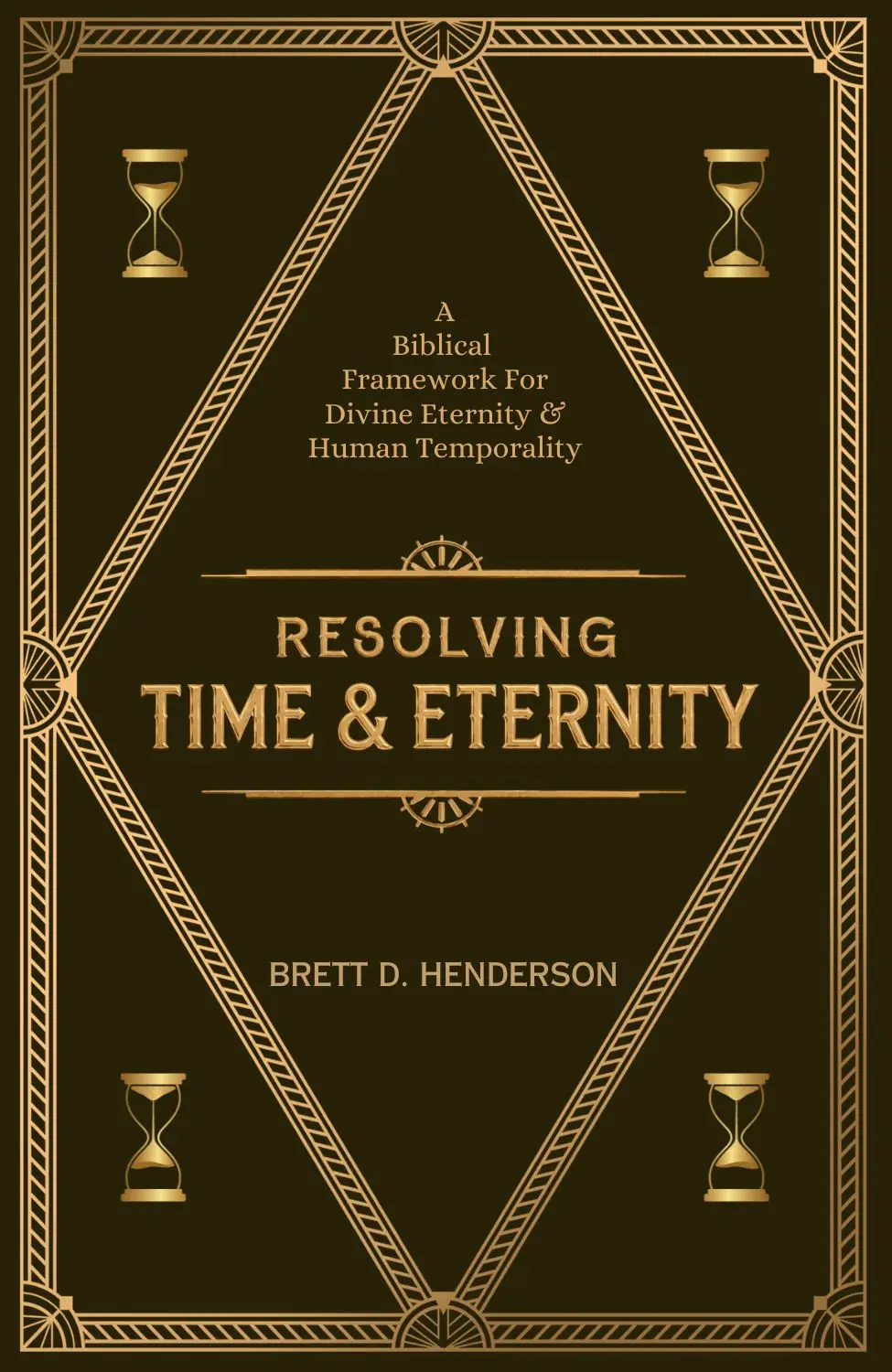
What Was God Doing Before Creation? Did God Create Time?
What was God doing before creation? The classical answer, given most famously by Augustine, is that there was no "before" in which God could be doing anything, because time is itself part of what God made. God was not waiting through empty ages. He was living the one eternal life He lives now, whole and undivided, and the world began not in time but with it. Below we set out Augustine's answer in his own words, the question at its hardest, the rival answers, and where the Many Beings series lands.
Key takeaways
- There was no "then" before the world. Augustine answered that time is a creature, so "there was no then when time was not."
- The hard form of the question is about change. If creating makes God the Creator of a world He was not related to before, does God change when He creates?
- The rivals each pay a price. William Lane Craig has God enter time at creation, the everlasting-God view has Him wait through time without a world, and process theism never lets Him be without a world at all.
- Frame-Indexed Classical Theism (FICT) reads "before creation" as dependence, not duration. Where Craig's view and process theism move God into time or the world into eternity, it holds that God created time, and that His life is whole without it.
What was God doing before creation, and what does "before" mean?
The question comes in two forms, and the answer to both turns on what "before" means once time is itself a creature. The child's form asks whether God was lonely or bored before He made anything. The adult form asks what came before the Big Bang, and whether "before" means anything there at all. Augustine put it in the form that has lasted. In Book XI of his Confessions he records it as a question others pressed on him: "What was God doing before He made heaven and earth?"
It is not an idle question, because Scripture itself speaks of a "before". Jesus prays to the Father, "Father, I want those you have given me to be with me where I am, and to see my glory, the glory you have given me because you loved me before the creation of the world" (John 17:24, NIV). Paul writes that God "chose us in him before the creation of the world to be holy and blameless in his sight" (Ephesians 1:4, NIV). And the psalmist praises the God who was there first:
"Before the mountains were born or you brought forth the earth and the world, from everlasting to everlasting you are God." (Psalm 90:2, NIV)
Free — the complete book
Get Book 1: Resolving the Free Will Dilemma free when you enter your name and email.
This essay takes one piece of it. Resolving the Free Will Dilemma takes the whole dilemma from first axiom to conclusion — the complete book, free.
No spam. Unsubscribe in one click.
So the Bible teaches that God loved, purposed and existed "before the creation of the world". The puzzle is what that word means when its subject is God. If it means an earlier stretch of time, God sat through an endless past before He acted. If it does not, we need to say what it does mean. Much turns on a second question, the one many readers type first: did God create time? The answer governs how we understand the attributes of God, and above all the eternity of God.
Volume One of the Many Beings series is free; start reading here.
Why didn't God create the world sooner?
At its strongest, the question concerns choice and change. Augustine met its first form in those who wished to prove the world eternal, and he records their pointed question in The City of God: "But why did God choose then to create the heavens and earth which up to that time He had not made?" If God existed through endless ages before the world, either He was idle for an infinite time, which seems unworthy of Him, or He chose one moment over every other for no reason, which seems arbitrary. Others, Augustine notes, granted that God made the world but held that it always existed, precisely to defend God from the charge of "casually changing His will, though He be unchangeable." Neither picture looks like the God of Scripture.
Augustine took the question seriously, and he said so. A famous joke is attached to it, and he reports it as someone else's and refuses it:
"Behold, I answer to him who asks, What was God doing before He made heaven and earth? I answer not, as a certain person is reported to have done facetiously (avoiding the pressure of the question), He was preparing hell, says he, for those who pry into mysteries." (Confessions XI.12.14)
He would rather, he said, have answered "I know not what I know not" than make a laughing-stock of someone "who asks deep things".
The modern form of the question is sharper still. Suppose we grant that there was no time before the world. Creating still seems to change something in God. Without creation, God is not the Creator of anything that exists. With creation, He is. He stands in a relation He did not stand in "without" the world, and a new relation looks like a new state. The Stanford Encyclopedia of Philosophy, citing Brian Leftow, states the problem in one line: "even extrinsic change still presupposes a before and after." The hardest version of the question, then, is this: can God begin to be Creator without beginning to be different, and so without a "before" in Himself? If He cannot, then the classical God who does not change His mind cannot create at all.
Volume Three takes up the beginning of time at length; see what it covers.
How have Christians answered the question?
Four answers have serious defenders, and a fifth is a common pastoral answer. Each sees something true.
Classical timelessness: Augustine, Boethius and Aquinas. Augustine's own answer was that the question assumes a time that did not exist. "But if before heaven and earth there was no time, why is it asked, What were You doing then? For there was no then when time was not" (Confessions XI.13.15). Time came with the world, because God made it: "At no time, therefore, had Thou not made anything, because You had made time itself. And no times are co-eternal with You." In The City of God he draws the conclusion that has defined the tradition: "the world was made, not in time, but simultaneously with time." Boethius gave the positive side, defining eternity as "the complete possession all at once of illimitable life". Aquinas added a distinction that does much of the work. When we say the world was made "after nothing", he wrote, "order is of two kinds: order of time and order of nature". The strength of this answer is that the empty ages and the question "why not sooner" both vanish. Its strain is the modern question above: it says little about how God becomes Creator without change. And if the whole of time is present to God at once, critics argue that the world begins to look as eternal as He is.
Craig: timeless without creation, temporal with it. William Lane Craig answers the strain directly. In the Stanford Encyclopedia's summary, "Craig's view is that God is timeless without creation, and temporal with creation." God "enters time at the moment of creation." The strength of the view is real. It takes the beginning of the universe seriously, it lets God relate to a world with a history, and it refuses a merely notional relationship. Its strain is that God Himself changes. A God who was timeless and is now temporal has passed from one state into another, and Craig knows that this transition is the hardest part of his view to state coherently.
The everlasting God. A third answer takes "before" literally. On pure temporalism, as the Stanford Encyclopedia puts it, God "has lived through and will live through a non-finite past and future." Richard Swinburne offers a refined version: "before creation God lives alone in a metrically amorphous time", a time with succession but no measure, which gains a metric only when the world begins. Nicholas Wolterstorff defends a related view of God as everlasting. Its strength is plain reading: "before the creation of the world" means earlier. Its strain is that the difficulties Augustine escaped come back. "Why not sooner?" has no answer. Time becomes a container that stands beside God, not a thing He made, and that presses on His aseity. And God must have lived through an infinite past, a question that belongs to the infinity of God.
Process theism. A fourth answer denies that there was ever a God without a world. Process thinkers in the line of Charles Hartshorne hold that God is always related to some world, so there is no "before creation" to ask about. The strength is that God is never idle. The cost is the doctrine of creation out of nothing, since the world, in some form, is as old as God.
The popular answer: the life of the Trinity. A common pastoral answer is that before creation the Father, the Son and the Spirit were loving one another, and it points to John 17:24. It is right about the text. Read as an account of what God did during a long prelude, though, the answer inherits the problems of the everlasting God. Read as an account of God's eternal life itself, it is exactly right.
Every volume in the series is listed on the books page.
Did God create time? How Frame-Indexed Classical Theism answers
Frame-Indexed Classical Theism (FICT) is a research program in analytic theology that resolves classical theological dilemmas by diagnosing them as artifacts of a single error: one term carried across two frames as though it meant the same thing in each. Here the term is "before". Craig's view, the everlasting God and process theism all read it in our finite, human frame, where "before" means earlier on a clock. Craig therefore needs God to enter time at creation. The everlasting God was in time already, and process theism never lets time begin. Read from God's own frame, "before" means something else. Volume Three, Resolving Time and Eternity, states it directly: "the term 'before' in the context of creation is an ontological designation of dependency, not a temporal duration."
One test shows the difference. Remove the world, and God remains wholly Himself, lacking nothing. Remove God, and there is no world at all. That asymmetry is what "God was before the world" means. It is Aquinas's "order of nature", and it is Augustine's point that God precedes all times "in the excellency of an ever-present eternity". Psalm 90:2 says the same in a single line: God is God "from everlasting to everlasting", and the mountains are not.
So did God create time? Yes. Time belongs to the created order, as the stars and the seasons do. Paul writes that grace "was given us in Christ Jesus before the beginning of time" (2 Timothy 1:9, NIV), and that God "promised before the beginning of time" the hope of eternal life (Titus 1:2, NIV). The Greek phrase is rendered in several ways, and we do not claim these verses prove that God is timeless. Volume Three's own verdict is modest: the timeless reading is "a reading Scripture permits, not one it compels." What the verses do show is that God's purpose is placed prior to the ages themselves, which fits a God who made time and stands in no need of it.
So what was God doing before creation? The same thing He is doing now. His life is not a timeline with an empty first half. Augustine's prayer puts the contrast exactly: "Your years neither go nor come; but ours both go and come, that all may come." Our lives are spent a day at a time, and the days we have spent are gone. God's life is not spent at all. It is one eternal life, possessed whole: the Father loving the Son "before the creation of the world", and His people chosen "in him" before the ages. John 17:24 and Ephesians 1:4 are not reports of an early period in God's history. They describe the life from which creation comes.
Creation adds nothing to that life, which is why God was free in making the world, the theme of the post on why God created. And because of divine simplicity, His creating and His sustaining are one act. The post on creatio ex nihilo sets out that point in full.
"Why not sooner?" now dissolves. There is no sooner, and no stretch of unused time beside God in which He might have acted. Craig's instinct survives: the beginning is real, and God really relates to a world with a history. Only the step into time proves unnecessary. Why does the world have a beginning at all? Volume Three rests the answer first on contingency, the world's total dependence on God, which is the burden of the argument from contingency. Arguments about infinity and the evidence of cosmology point the same way, but they are not asked to carry the conclusion alone.
The position is stated in one place; read the statement.
Can this answer withstand the strongest objections?
We have run thousands of simulated attacks against Frame-Indexed Classical Theism, drawn from academic and peer-reviewed sources. Five of them, pressed from Craig's temporal view, from eternalist critics of timelessness and from Newtonian physics, bear directly on what God was doing before creation.
Didn't God change when He began to create?
Here's one of those attacks and how the Many Beings framework would address it.
William Lane Craig gives the strongest form of the objection. Even if God undergoes no change in His nature when He creates, Craig argues, He undergoes an extrinsic change, a change in His relations, "which draws Him into time" (as quoted in the Stanford Encyclopedia). He is not the Creator of an existing world, and then He is. Craig also sees the danger in his own answer and states it frankly: "there seem to be two phases of God's life, a timeless phase and a temporal phase, and the timeless phase seems to have existed earlier than the temporal phase. But this is logically incoherent, since to stand in a relation of earlier than is by all accounts to be temporal." His reply is that "prior" to creation there are no intervals at all, a state that "looks suspiciously like a state of timelessness".
The defense grants Craig more than the classical replies he found too thin. The relation between God and the world is real on both sides. What does not follow is that it must be held in the same mode on both sides. The creature holds it in sequence. God holds it in one eternal act, which knows and sustains the whole of the world's history without passing through it. The step that makes God temporal is the assumption that a real relation requires one shared clock. Craig's careful reply does not remove that assumption. Once the world exists, his model still places God's possession of His one act inside sequence. And the state he describes without creation, changeless and without intervals, is no suspicion at all. It is God's own frame, and it needed no exit.
If there was no time before the world, what does "from nothing" mean?
Here's one of those attacks and how the Many Beings framework would address it.
R. T. Mullins, a critic of divine timelessness, argues that the timeless God cannot keep the doctrine of creation out of nothing. Press the point this way. If the whole of the world's history simply exists, then the world never comes into being. There was no moment when it was not, followed by a moment when it was. Without that "before", the words "from nothing" seem to lose their meaning, and creation shrinks to a timeless fact of dependence with no beginning in it.
The defense observes that "comes into being" says two different things, and both are affirmed. Inside history, the world has a real first moment, the first page of the timeline, which Genesis 1:1 names: "In the beginning God created the heavens and the earth" (NIV). From God's side, "from nothing" names total dependence: the world is not made from any material, and it exists only as God gives it being. Aquinas saw this distinction centuries ago. When we say the creature is made "out of nothing", he wrote, "no temporal priority of non-being to being is posited". The priority is an order of nature. Volume Three adds only that this world, in fact, has a first moment too.
If the whole of time simply exists, isn't it eternal like God?
Here's one of those attacks and how the Many Beings framework would address it.
The co-eternal objection presses the classical view with its own commitments. If God knows the whole of history in one eternal present, then the whole of history stands complete before Him, a four-dimensional whole that simply is. Gregory Ganssle, reviewing Mullins in Themelios, summarises the charge: "The result of eternalism is that the universe is co-eternal with God." (The theory that past, present and future are equally real is eternalism.)
The defense rejects the equation at its centre. To exist without passing away is not to exist of oneself. The timeline is held whole in God's knowing, but it is bounded, finite and entirely dependent, with a first moment and a last. God alone exists from Himself. Boethius drew the contrast long ago: it is one thing for the world to progress through an unending life, and another to embrace the whole of life in one simultaneous present. The world, even held entire, is the first kind of thing. God is the second. The post on creatio ex nihilo answers this objection at length, and its conclusion stands: the world is not God's rival in eternity, because it has nothing it did not receive.
Why couldn't the past stretch back forever?
Here's one of those attacks and how the Many Beings framework would address it.
A cosmologist can press this one hard. Perhaps the Big Bang was not the first moment of time but a bounce, with an earlier universe behind it. And the old argument that an infinite past could never have been crossed, one moment at a time, is contested by defenders of a coherent actual infinite in the tradition of Georg Cantor. If both supports fail, a beginningless past becomes a live rival to God as the ultimate explanation, and "before creation" would name an endless history, not God.
The defense agrees that neither support settles the matter, and says so. Volume Three does not rest the beginning on them. Its primary and decisive ground is contingency: because the created order exists only as God sustains it, it cannot be a self-standing, beginningless whole. The traversal argument and the cosmological evidence corroborate that conclusion. They are not asked to establish it on their own. Physics can show a boundary to the order we can measure. It cannot, by itself, certify that this boundary is the edge of being. That edge is fixed by the God who holds the world in being, "with the physics pointing in the same direction but never doing the deciding," as the book puts it. Whether any actual infinite can exist in creation belongs to Volume Five, Resolving Potential vs. Actual Infinity.
Didn't Newton show that time flows on its own?
Here's one of those attacks and how the Many Beings framework would address it.
Isaac Newton described "absolute, true and mathematical time" which "of itself, and from its own nature flows equably without regard to anything external". If Newton was right, time is a container that runs whether or not anything happens in it. Then there was time before creation after all, an empty stretch flowing on, and God must have passed through it before He acted. The question "what was God doing?" returns with full force.
The defense says that Newton's container is false, and that his instinct was sound. Physics since Einstein has shown that time inside the created order is measured differently by observers in different states of motion. Volume Three draws the theological consequence: "there is no empty temporal container waiting to be filled". Time exists only with the created world. Yet Newton reached for something real. There is one absolute fact about the whole of time, God's own undivided possession of it, and in the book's words Newton's "error was one of location, not of substance." He placed the absolute inside the universe, when it belongs to God. Volume Six, Resolving Rest & Relativity, takes up the absolute frame in full.
Volume Four meets Craig's argument on its own ground; see the book.
Frequently asked questions
Was God lonely or bored before creation?
No. Loneliness and boredom are states of a being that waits through time and lacks something. God neither waits nor lacks. Jesus speaks of the Father's love for Him "before the creation of the world" (John 17:24, NIV), and that love is God's own eternal life, whole without any world. God made the world from fullness.
Did Augustine say God was preparing hell for people who ask?
No. Augustine reports that "a certain person" gave that answer as a joke, and he refused it. He wrote that he would rather say "I know not what I know not" than mock someone "who asks deep things". His own answer was that "there was no then when time was not."
What was before the Big Bang?
Physics may not be able to say, since the Big Bang may or may not be the first moment of time. Theology gives the deeper answer: if time began with the world, there was no "before" the first moment at all. What stands prior to the world is not an earlier time but the God on whom the world depends.
Is time eternal?
No. Time is part of creation. Augustine wrote that God "had made time itself", and that "no times are co-eternal with You". Time began with the world and depends on God, as the world does. God alone is eternal, possessing His whole life at once rather than moment by moment.
Did God exist before creation?
Yes, in the only sense that applies. God does not exist earlier than the world on a shared timeline. He exists absolutely, and the world exists from Him. That is what Psalm 90:2 confesses: "from everlasting to everlasting you are God."
Where to go from here
What was God doing before creation? The question sounds like it is about God's schedule. It is really about the word "before", and once that word is read rightly, the empty ages disappear and nothing is lost. The world has a real beginning, and God has no waiting. He did not pass through a long prelude and then begin to act. He lives one life, and the world, with all its time, comes from it.
Volume One sets out the method from first premises, and it is yours free. The series carries it into evil, time and changelessness.