Skip to content
Brett D. Henderson Frame-Indexed Classical Theism
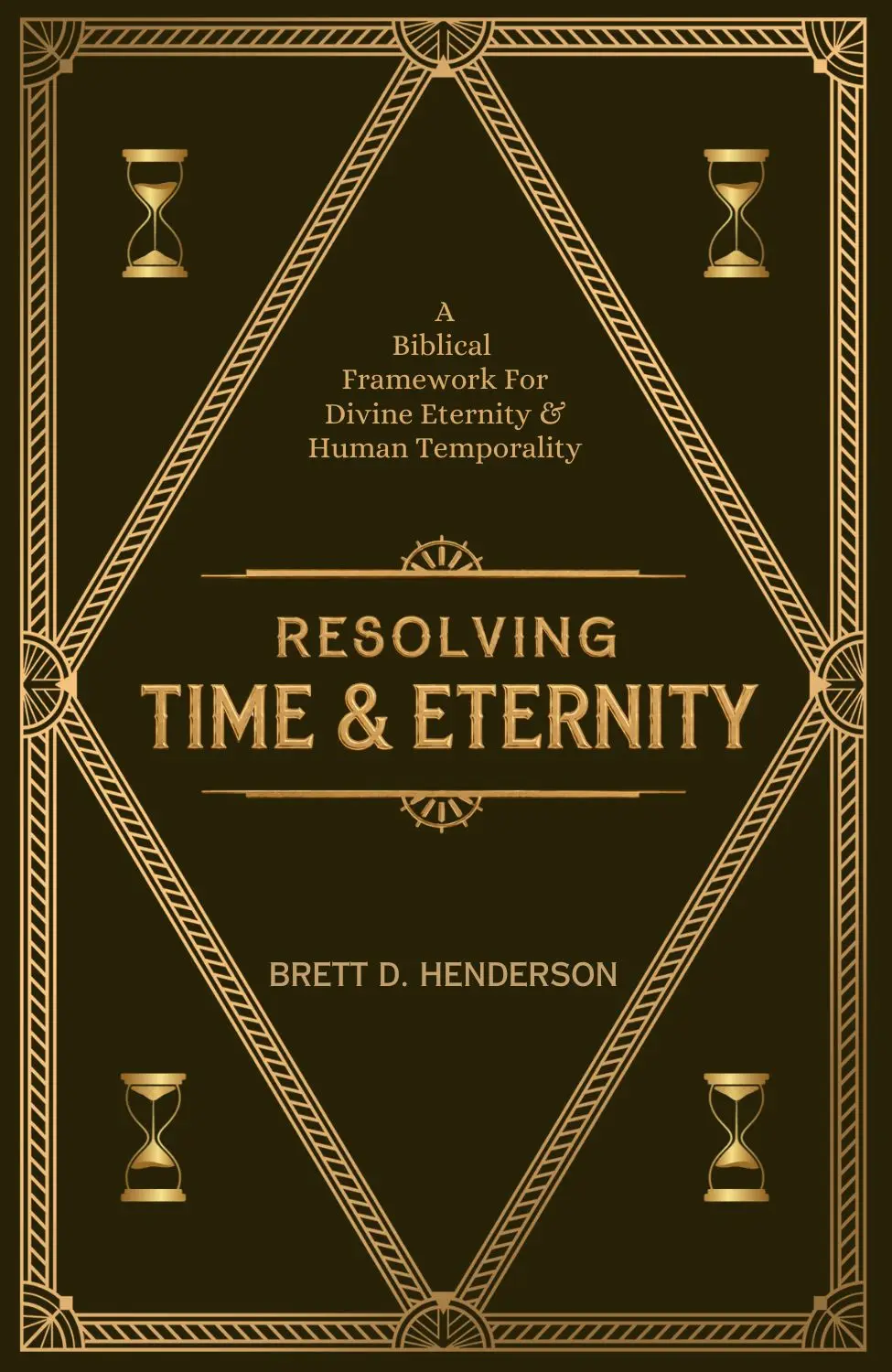
Cover of Resolving Time and Eternity

The Many Beings Framework Volume Three

Resolving Time and Eternity

A Biblical Framework for Divine Eternity & Human Temporality

Does God watch time pass, or see it whole? If God is timeless, is your future already fixed — and if he is not, how is he God? The A-theory and B-theory of time have argued past each other for a century because both assume one privileged sense of now that every frame must share. If you finished the four-views collection with four essays talking past each other rather than a position argued through, that is the gap this was written into.

  • Length34 chapters, three parts
  • FormatsKindle and audiobook · print editions in production
  • ReadsStandalone — the most technical volume in the series
  • EngagesMcTaggart, Craig, Mullins, Skow, Stump & Kretzmann

Paperback and hardcover are in production. Join the list to hear when they land.

What this volume argues

  • How God’s timeless eternity coheres with real human temporal experience, without weakening divine transcendence or denying that time genuinely passes.
  • A direct resolution of McTaggart’s paradox: where the 1908 argument for the unreality of time equivocates, and why both the A-series and B-series survive once frame-indexed.
  • How divine timelessness fits the rest of classical theism — divine simplicity, immutability, impassibility, aseity — instead of sitting awkwardly beside it.
  • What frame-indexing does to divine foreknowledge, and why middle knowledge becomes unnecessary rather than false.
  • How the relativity of simultaneity in special relativity integrates with Augustine, Boethius and Aquinas in one testable account.
  • Focused engagement with eternalism, presentism, the growing block, the moving spotlight, open theism, process theology, Craig’s hybrid view, Stump and Kretzmann’s ET-simultaneity, and Mullins’s case against divine timelessness.

Inside the book

The complete table of contents. Part Two is the longest in the series — sixteen chapters resolving one dilemma at a time.

Part One — The Many Beings Framework

The machinery, built from two axioms.

  1. Argument Summary
  2. Beings and Intrinsic Qualities
  3. Defining the Core Concepts
  4. The Natures of God and Man
  5. Nature Determines Perception
  6. Incompatibility of Frames and Terms
  7. The Many Beings Fallacy
  8. A New Foundation
  9. The True Source of Tension
  10. The Ontology of the Framework

Part Two — Resolving Time and Eternity

Sixteen chapters, each taking one contested question in the philosophy of time.

  1. Defining Frame-Specific Terms
  2. Resolving the A/B Theory of Time Dilemma
  3. Resolving the Problem of the Beginning
  4. Special Relativity and the Metric Time Boundary
  5. Resolving the Problem of the Privileged Present
  6. Resolving Future Contingents, Modality and Divine Foreknowledge
  7. Resolving Tensed Facts
  8. Resolving McTaggart’s Paradox
  9. Resolving the Presentist’s Dilemma
  10. Resolving Endurantism vs. Perdurantism
  11. Resolving Causation Across Temporal Frames
  12. Conclusions on Biblical Prophecy
  13. Conclusions on Atemporality, Sempiternity and Human Experience
  14. Resolving Eschatological Time: the New Heavens and New Earth
  15. Resolving the Ontology of Time
  16. Resolving Substantivalism and Relationalism

Part Three — Historical and Contemporary Views

The live positions, engaged by name and at full strength.

  1. Eternalism, the Growing Block and the Shrinking Tree
  2. Bradford Skow on the Moving Spotlight Theory
  3. Process Theology and a Temporal God
  4. Boyd and Sanders on Open Theism
  5. Strict Temporalism
  6. William Lane Craig’s Hybrid View of Time
  7. Stump and Kretzmann’s ET-Simultaneity
  8. Final Conclusion

Who this is for

Readers of the multi-view collections
If you finished God and Time: Four Views with four essays talking past each other rather than a position argued through, this was written for you.
Readers drawn in by the physics
Presentism against the block universe, and relativity’s challenge to a universal “now” — taken as the physicists give it, not as a metaphor about trains.
Apologists
You need a real response to “if God already knows what you will choose, your choice is an illusion.”
Philosophers and academics
Definitions stated, inferences shown, conclusions open to refutation on the merits.

Not for: a first encounter with the framework. This is the most technical volume — Volume One is the easier entry, and it is free.

What does “eternal” actually mean?

Thirty-four chapters answering that carefully enough to be argued with, and grounded in Scripture throughout.

Free — the complete book

New to the framework? Start free.

Volume One builds the machinery this volume applies, and it costs nothing.

No spam. Unsubscribe in one click.

Before you start

Questions readers ask first.

Do I need to read the earlier volumes first?

Not strictly — Part One rebuilds the framework from its axioms, tailored here to time and eternity. But this is the most technical volume in the series, and most readers find it easier having met the machinery on a more familiar dilemma first.

Volume One is free, and it is the recommended entry point.

Do I need a physics background?

No. Special relativity is introduced from scratch and taken exactly as the physicists give it — the relativity of simultaneity, time dilation, what Michelson-Morley actually ruled out.

What you will not get is a metaphor about trains. The physics is treated as physics, and the interpretive questions are kept clearly separate from the predictions, which is where most popular treatments blur.

How is this different from God and Time: Four Views?

That is a collection of four essays with four authors, and it is genuinely useful for mapping the God and time debate. What it does not do is resolve anything — by design.

This is one position argued through, engaging those same views by name: eternalism, presentism, the growing block, the moving spotlight, Craig’s hybrid view, Stump and Kretzmann’s ET-simultaneity, and Mullins’s case against divine timelessness.

Where does it land — divine timelessness or temporalism?

Timelessness, but not as one option beating another. The argument is that the A-series and the B-series are both true, each of a different frame, and that the God and time dispute survives only while “now” is predicated univocally across both.

That also settles what happens to divine foreknowledge, prophecy and future contingents, each of which gets its own chapter.

Is there a print edition?

Not yet. Kindle and audiobook are available now; paperback and hardcover are in production. Join the list and you will hear when they land.

Cover of Resolving the Free Will Dilemma

Free — the complete book

New to the framework?

Volume One builds it from the two axioms and applies it to sovereignty and free will — the complete book, free.

No spam. Unsubscribe in one click.