Skip to content
Brett D. Henderson Frame-Indexed Classical Theism
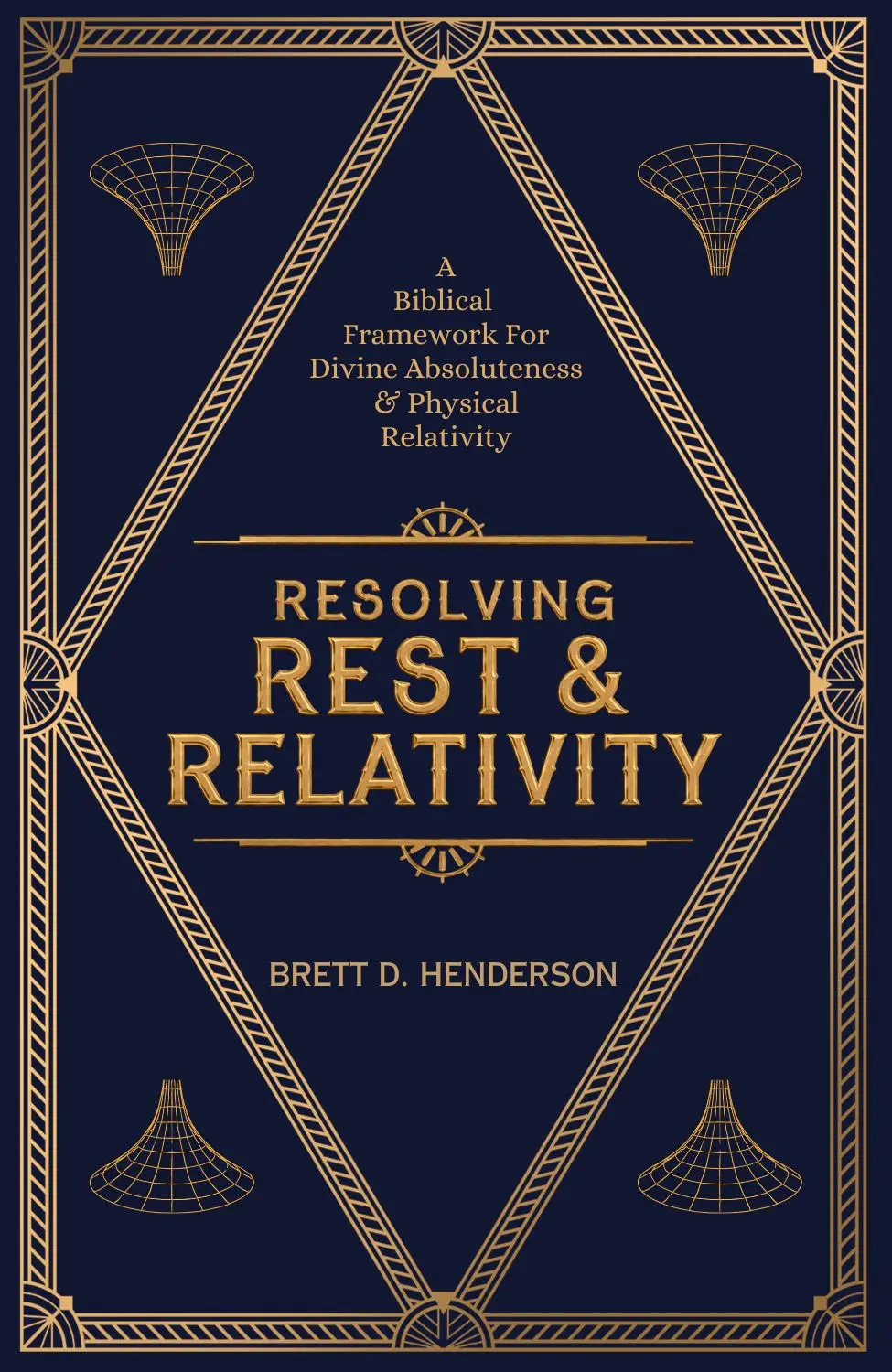
Cover of Resolving Rest & Relativity

The Many Beings Framework Volume Six

Resolving Rest & Relativity

A Biblical Framework For Divine Absoluteness & Physical Relativity

Relativity says there is no privileged frame of reference — no fact of the matter about who is really at rest. Classical theism says God is the one absolute, the unmoved point every other motion is measured against. Physics appears to have abolished exactly the thing theology cannot do without. If you have heard that relativity abolished absolute anything and suspected the inference was doing more work than the physics licenses, it was.

  • Length27 chapters, three parts
  • StatusIn production · not yet published
  • ReadsStandalone · Part One rebuilds the framework
  • EngagesNewton, Lorentz, Einstein, Hawking, Krauss & Tegmark

Not yet published. The list hears first.

What this volume argues

  • The position argued here is Frame-Indexed Classical Theism: index rest to its frame and Einstein’s operationalism and the neo-Lorentzian reading stop deciding a theological question neither of them was equipped to reach.
  • Where science and religion actually meet on this question: why the absence of a privileged frame of reference in relativity does not abolish the metaphysical rest frame. The two claims are about different orders of fact, and the apparent conflict is an indexing error.
  • What the universe having boundaries actually amounts to, and how a bounded creation coheres with an unbounded creator.
  • How asymptotes behave as a formal model for absolute qualities: why a creature can approach a divine perfection endlessly without ever arriving, and why that is a feature of the frame rather than a limitation of effort.
  • The “bandwidth of being”: what a finite frame can carry of an infinite one, and what necessarily gets lost in the transmission.
  • Why the same formal structure keeps reappearing across physics, mathematics and theology, and what that cross-disciplinary isomorphism indicates about the underlying reality.
  • Whether science disproves God, taken as a real question: Newton on absolute space, Lorentz and the neo-Lorentzians, Einstein’s operationalism, Hawking on the no-boundary proposal, Krauss on a universe from nothing, Tegmark’s multiverse, and the simulation hypothesis each engaged by name.

Inside the book

The complete table of contents. The physics is taken as the physicists give it; the theological conclusions are drawn afterward and kept separable from the predictions.

Part One: The Many Beings Framework

The machinery, built from two axioms.

  1. Argument Summary
  2. Beings and Intrinsic Qualities
  3. Defining the Core Concepts
  4. The Natures of God and Man
  5. Nature Determines Perception
  6. Incompatibility of Frames and Terms
  7. The Many Beings Fallacy
  8. A New Foundation
  9. The True Source of Tension
  10. The Ontology of the Framework

Part Two: Resolving Rest and Relativity

Nine chapters on the absolute frame, the bounded universe, and what a finite frame can carry.

  1. Defining Frame-Specific Physical Terms
  2. Resolving the Absolute Frame Dilemma
  3. Resolving the Boundaries of the Universe
  4. Resolving Asymptotes and Absolute Qualities
  5. Resolving the Bandwidth of Being
  6. Resolving Finite Walls and Infinite Tolls
  7. Resolving the Cross-Disciplinary Isomorphism
  8. The Metaphysical Rest Frame
  9. Conclusions on the Bounded Universe

Part Three: Historical and Contemporary Views

The live positions in physics and cosmology, engaged by name.

  1. Newton and Absolute Space
  2. Lorentz, the Neo-Lorentzians, and Craig
  3. Einstein’s Operationalism
  4. Hawking and the No-Boundary Proposal
  5. Krauss and the Universe from Nothing
  6. Tegmark and the Multiverse
  7. The Simulation Hypothesis
  8. Final Conclusions

Who this is for

Readers who came for the physics
Special and general relativity are taken exactly as the physicists give them. The interpretive questions are kept clearly separate from the predictions, which is where popular treatments usually blur.
Readers who found Volume Three’s relativity chapters the interesting part
This is where that thread is followed all the way down, from the metric time boundary to the metaphysical rest frame.
Apologists facing the cosmology arguments
Hawking’s no-boundary proposal, Krauss on nothing, and the multiverse each get a chapter rather than a paragraph of dismissal.
Philosophers and academics
Definitions stated, inferences shown, conclusions open to refutation on the merits.

Not for: a first encounter with the framework, or readers wanting theology with the physics kept decorative. Volume One is the easier entry, and it is free.

Free — the complete book

New to the framework? Start free.

Volume One builds the machinery this volume applies, and it costs nothing.

No spam. Unsubscribe in one click.

Before you start

Questions readers ask first.

When is this published?

Still in production, and the least finished of the drafted volumes. No date has been fixed, and one will not be announced until it is certain.

Join the list and you will hear the moment it is available.

Does this deny relativity?

No. Special and general relativity are accepted exactly as the physics gives them, predictions and all. Nothing in this volume requires an experimental result to come out differently.

What is denied is the further philosophical claim that the absence of a privileged physical frame settles whether there is a privileged metaphysical one. Those are separate questions, and the argument is that they have been run together.

Do I need a physics background?

No. Every concept is introduced from scratch: the relativity of simultaneity, the Lorentz transformations, what Michelson-Morley actually ruled out.

It is, however, the volume with the most technical machinery after Volume Three.

How does this relate to Volume Three?

Volume Three handles time and eternity, and touches relativity where the metric time boundary requires it. This volume takes up space, rest and motion, and follows the physics considerably further.

They are independent. Neither requires the other, though readers who liked the relativity material in Volume Three tend to want this one.

What is the “bandwidth of being”?

A formal way of asking what a finite frame can carry of an infinite one. How much of an unbounded reality can be represented within bounded limits, and what is necessarily lost.

It is the volume’s own contribution to the framework, and Chapter Fifteen is where it is derived.

Cover of Resolving the Free Will Dilemma

Free — the complete book

Hear the moment Volume Six lands.

Still in production. Join the list to hear first, at launch pricing.

No spam. Unsubscribe in one click.

The complete framework

Get the full series on Amazon

Every published volume in one place, in reading order. Amazon takes the whole set in a single step.

Buy the full series

Amazon’s own series page. Four of seven volumes are published.

Launch notice

Sign up to be notified when this book releases, and get exclusive launch discounts.

The list hears first, and it hears with a discount. Tell us where to send it and this book will find you the day it ships.

No spam. Unsubscribe in one click.