Skip to content
Brett D. Henderson Frame-Indexed Classical Theism
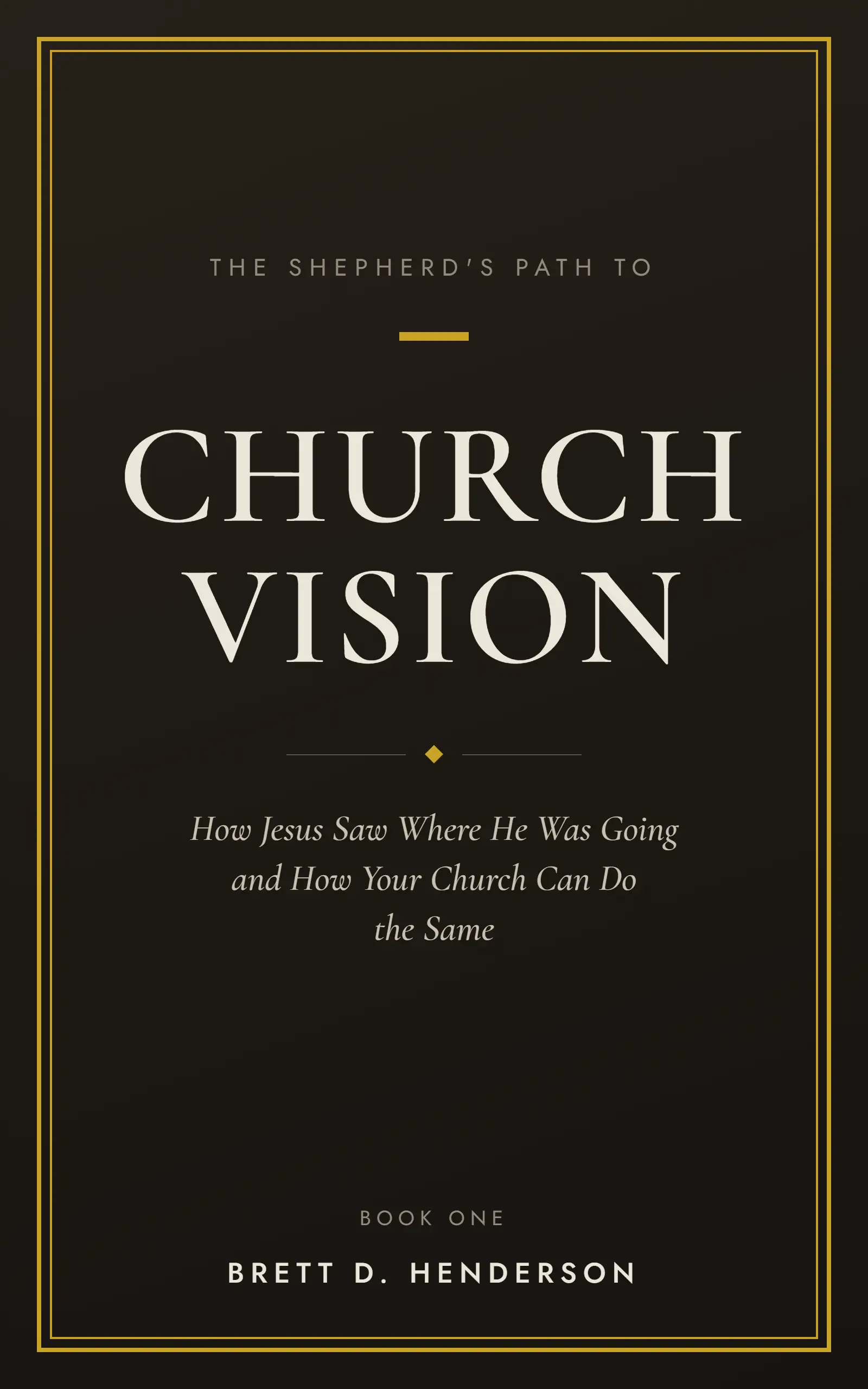
Cover of The Shepherd’s Path to Church Vision

The Shepherd’s Path Volume One

The Shepherd’s Path to Church Vision

How Jesus Saw Where He Was Going and How Your Church Can Do the Same

Ask five people on your leadership team where the church will be in five years. You will get five sincere, reasonable, completely different answers — and none of them will be wrong, because nothing was ever decided. That is not a communication problem. The congregation worked it out long before the elders did, and it is why the willing ones have stopped volunteering for anything that lasts more than a season.

  • Length12 chapters, four parts
  • StatusFull draft complete · not yet published
  • Written forPastors and church leaders
  • IncludesVision worksheets in the back matter

Not yet published. The list hears first.

The problem

What your church is actually showing you.

None of these are commitment problems. Each one is a symptom of the same missing thing, and each has a chapter.

Ask five leaders where the church is going and you get five answers.

All sincere, all different, because a destination was never fixed. The book is emphatic that you get one, and that choosing it means refusing four good alternatives out loud.

Chapter Four — “One Vision, Not Five”

The vision statement is on the wall and nobody can quote it.

If it cannot be repeated from memory it cannot be acted on. The test is whether the language is sayable, not whether it is accurate.

Chapter Seven — “Say It Like Milk and Honey”

Attendance is steady, the people are kind, and nothing is happening.

This is the hardest condition to diagnose because nothing is visibly wrong. It is also the one the book opens on.

Chapter Two — “The Comfortable Church”

Your vision is achievable without God.

If the plan works on competence and budget alone, it is a business objective. It should be large enough that failure is the likely outcome without him.

Chapter Six — “Make It Impossible”

Your values are aspirations nobody uses to decide anything.

Values are not what you admire. They are what you refuse, which makes them constraints on real decisions rather than words on a page.

Chapter Eight — “Values Are Your Constraints”

You cast the vision and nobody moved.

People follow demonstrated cost, not stated conviction. The chapter is about what the leader pays first.

Chapter Ten — “Step Into the Fire First”

Every one of those is a chapter rather than a principle to go away and apply. The full contents are below.

What this volume argues

  • Why a comfortable church is a dying church, and how to tell the difference between peace and stall.
  • What a church vision actually is — not a mission statement, not a values list, and not five priorities competing for the same attention.
  • Why one vision beats five, and what to do with the four good things you will have to stop saying out loud.
  • How to make the vision large enough to be impossible without God and concrete enough that a volunteer can act on it Monday.
  • How to say it so it lands — the “milk and honey” test for language a congregation actually repeats.
  • Why your values function as constraints rather than aspirations, and what that changes about how you write them.
  • What a real vision costs the leader who means it, and why you step into the fire before anyone follows you into it.

Inside the book

The complete table of contents. The book moves from diagnosis, to definition, to making it live, to what it costs you personally.

Part One — Why a Church Without Vision Is Dying

The diagnosis, stated plainly.

  1. Where There Is No Vision
  2. The Comfortable Church

Part Two — What a Vision Actually Is

The definition, and the discipline of holding to one.

  1. The View From the Mountain
  2. One Vision, Not Five
  3. Vision Is Hard to Get
  4. Make It Impossible
  5. Say It Like Milk and Honey

Part Three — Making the Vision Live

Turning a sentence into something a congregation lives inside.

  1. Values Are Your Constraints
  2. The Story Everyone Lives Within

Part Four — The Cost of a Real Vision

What it takes from the leader, and why it never finishes.

  1. Step Into the Fire First
  2. Built for Battle
  3. The Vision Is Never Finished

Who this is for

Pastors of a plateaued church
Attendance is flat, the people are kind, and nothing is obviously wrong. That is the condition this book was written about.
Church planters
You are writing the vision now, before there is a congregation to renegotiate it with. This is the cheapest moment to get it right.
Elder boards and leadership teams
The back matter includes worksheets built to be worked through together rather than read alone.
Leaders who have written a vision statement nobody remembers
The problem is usually not commitment. It is that the sentence was never sayable.

Not for: readers looking for theology of the church. This is a practical book for people with a congregation to lead on Sunday. The Many Beings Framework is where the analytic theology lives.

Free — the complete book

Hear when the series launches.

Seven books on the practical work of leading a church. The list gets them first, at launch pricing.

No spam. Unsubscribe in one click.

Before you start

Questions leaders ask first.

When is this published?

The full manuscript is drafted and has been through a depth pass. No date has been fixed, and one will not be announced until it is certain.

Join the list and you will hear the moment it is available, at launch pricing.

Is this a business book with Bible verses on top?

No. The argument is built from how Jesus actually led — where he went, what he refused, and what he told people plainly — rather than from a leadership model with proof texts attached afterward.

Where business thinking is genuinely useful it is used, and named as such rather than smuggled in.

Do I need to read the series in order?

No. Every book in The Shepherd’s Path stands alone.

Vision is first for a reason, though: strategy, growth and discipleship all assume you know where the church is going.

My church already has a vision statement. Is this still for me?

Probably more than for someone starting from nothing. Most churches have a statement; far fewer have a vision anyone can repeat from memory or act on without checking the website.

Chapter Seven is the test for which one you have.

How does this relate to the theology books?

Different reader, different register, same conviction underneath — that thinking carefully is an act of stewardship rather than a substitute for faith.

The Many Beings Framework is analytic theology for readers already inside that conversation. This series is for pastors with a congregation to lead.

Cover of Resolving the Free Will Dilemma

Free — the complete book

Hear the moment this one lands.

The draft is complete. The list hears first, at launch pricing — and Volume One of the theology series arrives free in the meantime.

No spam. Unsubscribe in one click.